
A New Era in Aviation
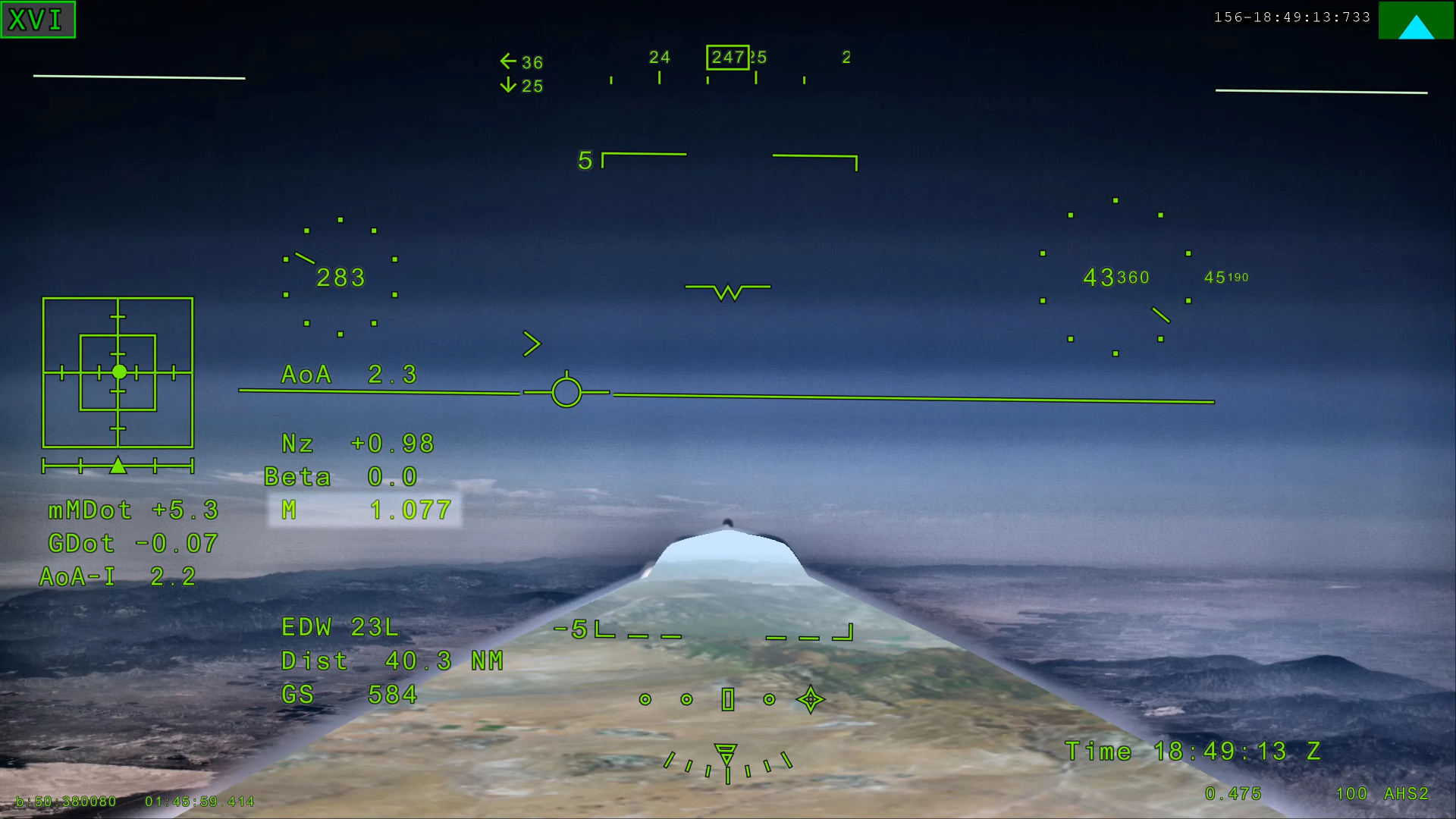
NASA’s X-59, an experimental supersonic aircraft developed in partnership with Lockheed Martin, has made significant progress in the field of aviation. Recently, it broke the sound barrier for the second time, achieving a top speed of Mach 1.4 (about 924 miles per hour). This accomplishment came just a week after its first supersonic flight, marking a crucial step forward in the development of “quiet supersonic” technology.
The X-59’s test flights took place at Edwards Air Force Base in California. On June 5, test pilot Jim “Clue” Less conducted an 81-minute round trip, reaching a speed of Mach 1.1 — 713 mph (1,147 km/h) — at an altitude of 43,400 feet (13,200 meters). Just a week later, on June 12, the X-59 reached Mach 1.4 (about 924 mph) at an altitude of 55,000 feet (16,700 m). These tests are part of a broader effort to develop supersonic aircraft that can travel faster than the speed of sound without creating the loud sonic booms associated with traditional supersonic flight.
The History of Breaking the Sound Barrier
The concept of breaking the sound barrier dates back to 1947 when U.S. Air Force test pilot Charles “Chuck” Yeager flew the Bell X-1 aircraft over California’s Mojave Desert. Yeager achieved a speed of Mach 1.06, opening up new possibilities in aviation. However, this breakthrough was more of a scientific achievement than a practical one for commercial air travel.
Catherine Bahm, NASA’s Low Boom Flight Demonstrator project manager, who oversees the X-59’s development, once joked that the X-1 broke the sound barrier and now they’re trying to fix it. This highlights the challenges of developing supersonic technology that is both fast and quiet.
When a plane moves forward, it pushes aside the air molecules in front of it, creating sound waves that spread from the aircraft like the wake trailing a boat. When a craft breaks the sound barrier, the air pressure waves behind it compress and build into a shock wave, which releases energy as a thunderous “sonic boom.”
The Impact of Sonic Booms
A sonic boom can exceed 110 decibels — as loud as a fully operational steel mill and above the threshold where most people feel ear pain. These booms have been known to cause damage, such as shattering windows and even fish tanks. Because of these risks, the Federal Aviation Administration banned non-military aircraft from breaking the sound barrier above U.S. soil in 1973.
Although the Concorde, operated by Air France and British Airways, was the world’s first commercial supersonic flight, it was only allowed to operate because it broke the sound barrier over the Atlantic Ocean. The Concorde was eventually decommissioned after a crash during takeoff from France’s Charles de Gaulle airport in 2003.
The Future of Quiet Supersonic Flight
The X-59’s ultra-long, skinny nose is designed to minimize the shockwave its sonic boom creates. If successful, this technology could allow for faster-than-sound commercial domestic flights over land. This would mean passengers could travel from Los Angeles to New York City in under three hours, compared to the current five-to-six-hour flight time.
While NASA has not yet released information about how many decibels the X-59’s first sonic boom produced, the potential benefits of quiet supersonic flight are vast. Beyond commercial applications, this technology could also have significant military uses, making secret missions much stealthier.
As testing continues, the X-59 represents a promising step toward a future where supersonic travel is both efficient and environmentally friendly.