Breakthrough in Neuromorphic Vision Technology
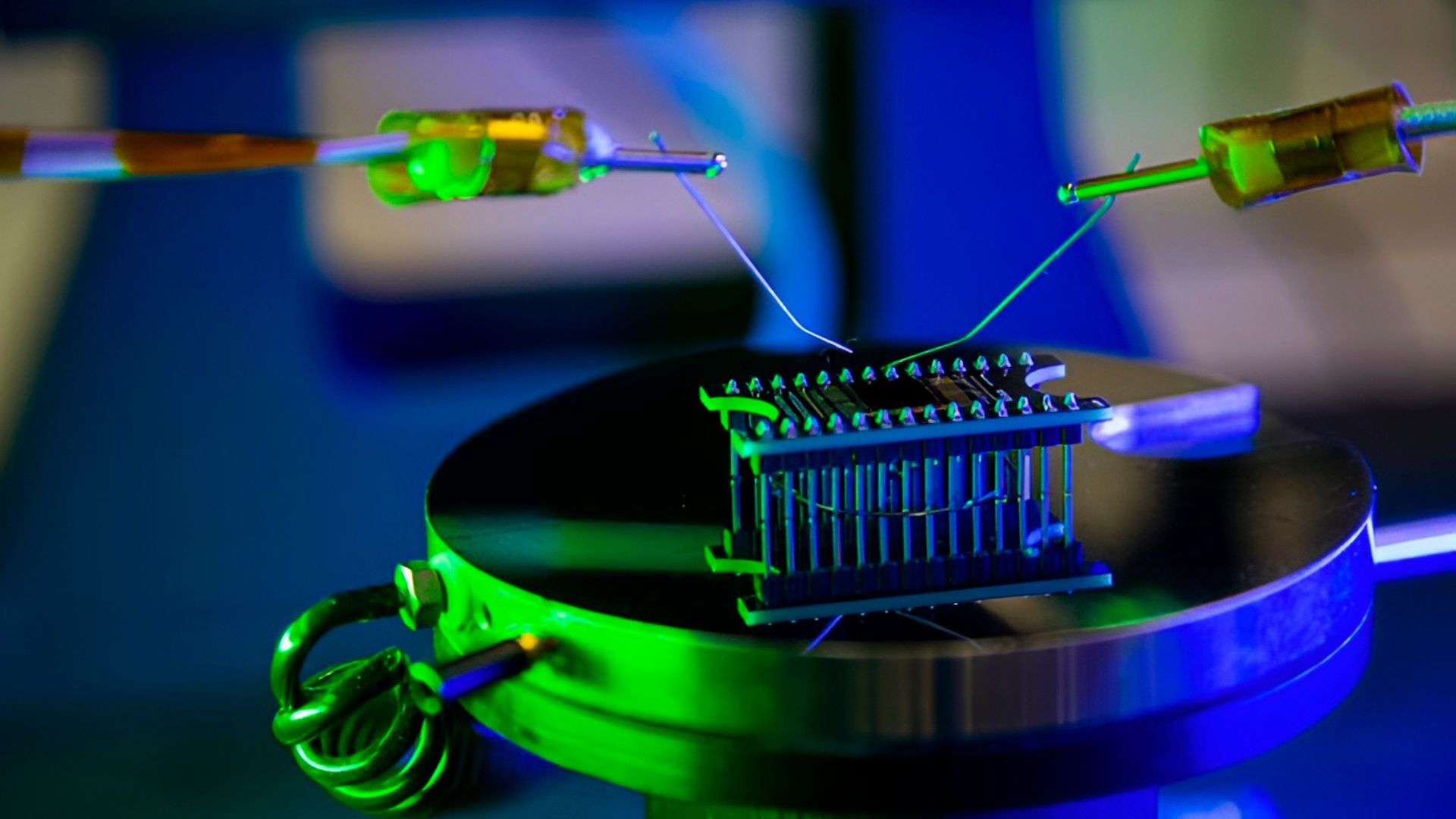
Researchers in Australia have made a significant advancement in the field of neuromorphic engineering with the development of a vision chip that can see, process, and store visual information all in one device. This innovation closely mimics the way the human eye and brain work together, offering a new approach to machine vision systems.
The chip, built using doped indium oxide, is designed to reduce reliance on external processors and enable faster decision-making in various applications, such as autonomous systems. The project was led by engineers at RMIT University, with contributions from Deakin University and the University of Melbourne. The team emphasizes that their device combines sensing, processing, and memory functions into a single platform, eliminating the need for separate hardware components that typically slow down conventional machine vision systems.
How the Chip Works
Unlike traditional imaging systems that capture data and send it to external processors, this new chip performs computation directly where the light is detected. The sensing layer, which is thousands of times thinner than a human hair, is engineered to respond to light and retain information over time. This allows the chip to function more like a biological visual system, enabling it to process and store visual input efficiently.
The integrated approach of the chip could significantly reduce energy consumption and improve response speed in real-time environments. The researchers tested the device using ultraviolet light and are now working to extend its capabilities to visible and infrared light, opening up a broader range of applications.
Brain-Like Vision System
The chip is designed to mimic the way the human eye captures light and how the brain processes and stores visual input. It performs multiple tasks on a single platform, including sensing incoming light, processing signals, and storing visual information for later use.
Professor Sumeet Walia, the team leader, highlighted the goal of removing the delay and energy cost associated with transferring data between separate systems. “We’ve made real-time decision making a possibility with our invention because it doesn’t need to process large amounts of irrelevant data and isn’t being slowed down by data transfer to separate processors,” he said.
The device also demonstrated the ability to retain visual information for longer periods without frequent electrical refresh signals, reducing energy use and improving efficiency.
Inspiration from the Human Brain
Aishani Mazumder, the first author and RMIT PhD researcher, explained that the system draws inspiration from how the brain processes information. “Neuromorphic vision systems are designed to use similar analog processing to the human brain, which can greatly reduce the amount of energy needed to perform complex visual tasks compared with today’s technologies,” she said.
Applications in Autonomous Machines
The researchers believe the technology could be used in self-driving cars, autonomous robots, and monitoring systems that operate in dangerous environments. Potential applications include object recognition in vehicles, detection systems in remote or hazardous areas, and advanced imaging for forensics and industrial inspection.
Because the chip integrates multiple functions into a single element, it could support longer-term autonomous operation without heavy computational infrastructure. The team says this makes it suitable for systems that need to adapt quickly to changing environments.
A New Era in Machine Vision
The device mimics the retina’s ability to capture an entire image and the brain’s ability to interpret and store it, enabling a more compact and efficient approach to machine vision. The researchers believe this could eventually lead to vision systems that improve with experience, similar to biological systems.
The team used specialized nanofabrication and microscopy facilities at RMIT University, with support from the Australian Research Council and the National Computational Infrastructure.
This groundbreaking study was published in the journal Advanced Functional Materials.