
Headphones have come a long way since their inception, evolving from cumbersome devices to sleek, high-tech accessories that are now an essential part of daily life. Today’s over-ear noise-canceling headphones, such as the AirPods Max 2, showcase advanced technology with real-time EQ and digital noise cancellation. However, these modern marvels are not without their challenges—weight is often cited as a major concern. The AirPods Max 2 weigh 13.6 ounces, which might seem heavy at first glance, but it’s worth noting that the original headphones weighed around 10 pounds, making today’s models seem almost featherlight by comparison.
The history of headphones dates back to 1881 when they were invented by Ezra Gilliland. These early devices, known as the “Gilliland Harness,” were far removed from the music-focused gadgets we know today. Instead, they were used by switchboard operators to communicate through a single earpiece connected to a phone and a microphone. The device was so heavy that it was designed to rest on the operator’s shoulder, highlighting just how far the design has come.
In the years that followed, headphone designs continued to evolve, though they still bore little resemblance to modern audiophile headphones. A decade after the first “harness” was introduced, one company created a pair that rested on a literal rod. This was an unusual design, but even more intriguing was the fact that Electrophone offered a subscription service allowing users to listen to live performances in London via a switchboard. These early iterations laid the groundwork for future innovations, even if they weren’t immediately recognizable as the headphones we use today.
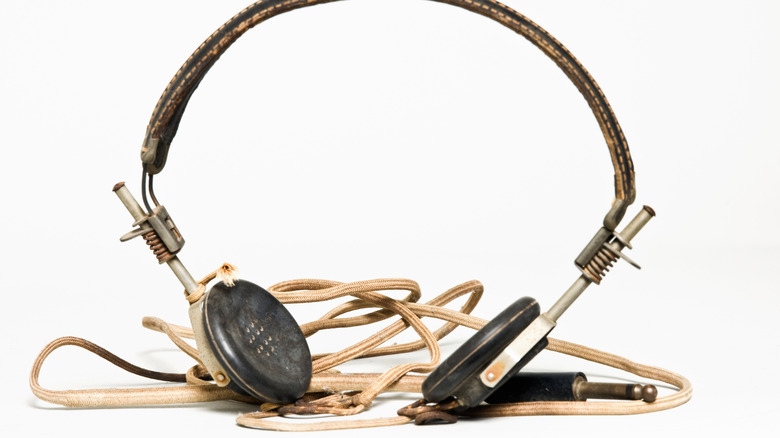
Despite the initial heaviness of early headphones, the search for a lighter alternative began soon after. In the 1920s, Ernest Mercadier patented the first earbuds, which, like the early harnesses, had no connection to music. However, his design was remarkably similar to the in-ear headphones we use today, featuring rubber covers that provided comfort and fit.
The first true headphones emerged in 1910 when Nathaniel Baldwin, an inventor based in Utah, created a device that could rest on the head. His design consisted of two padded ear cups connected by bands, making it significantly more comfortable than previous models. Baldwin’s invention was simple and did not require external power, which made it ideal for use in the U.S. Navy, which ordered 100 units. This marked a turning point in the development of headphones, setting the stage for future advancements.
In 1937, Eugen Beyer of Beyerdynamic introduced the first dynamic headphones, which used a moving coil transducer to deliver high-quality audio. While these models found success in professional settings, it wasn’t until 1958 that commercially available headphones designed specifically for music became widely available. This era marked the beginning of the mainstream adoption of headphones for personal listening experiences.
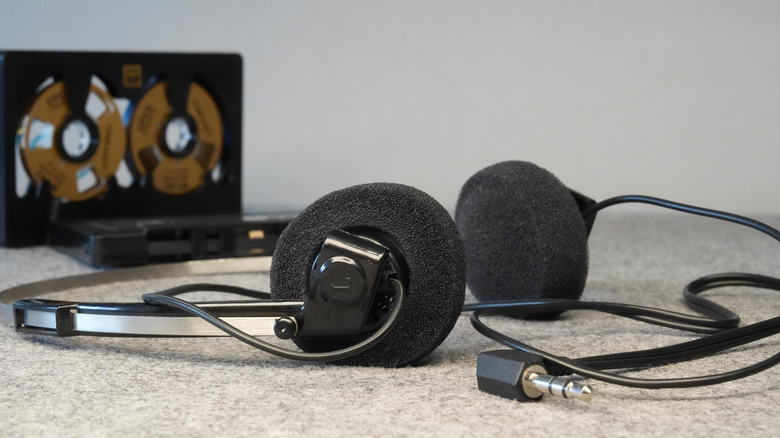
The 1960s saw significant developments in headphone technology, including the introduction of wireless AM/FM headphones and the first open-back models developed by Sennheiser. Despite these innovations, the basic function of headphones remained the same—users would still wear them at home, connected to a stereo system. This changed dramatically in 1979 when Sony launched the Walkman, a portable device that revolutionized how people listened to music. The Walkman’s success led to a massive increase in headphone popularity, with Sony selling over 400 million units worldwide.
As the decades passed, companies continued to refine headphone designs and introduce new technologies. Bose pioneered the first noise-canceling headphones in 1989, while Bluetooth technology gained traction around 2004. Today’s headphones are equipped with features such as adaptive EQ and advanced noise cancellation, offering an unparalleled listening experience. They are also more comfortable than ever, making it easy to overlook the incredible progress that has been made.
Next time you find your AirPods Max feeling a bit heavy, take a moment to reflect on the journey of headphones—from their early days as bulky, uncomfortable devices to the sleek, high-performance models we enjoy today. It’s a testament to human ingenuity and the relentless pursuit of better sound.