Amazon, a major player in the field of artificial intelligence, has developed a groundbreaking technology aimed at enhancing the resilience and energy efficiency of its data centers. According to a 2026 report, Amazon claims that this new architecture will reduce the number of routers and switches used in its AWS data centers by 69% and cut power consumption by 40%, while simultaneously improving throughput by 33%.
The core of this innovation is known as Resilient Network Graphs (RNG). This approach utilizes random cable connections to optimize network performance. Two key components drive this system: the ShuffleBox, a hardware device that randomizes physical connections between network components, and Spraypoint, a custom traffic-routing algorithm designed to function within the RNG framework.
RNG is based on a theory developed by Hungarian mathematicians in 1959 called random network graphs, specifically the Erdős–Rényi model. To grasp the concept, imagine a graph with multiple points connected randomly according to fixed probability rules. This results in different final graphs each time, yet they maintain predictable statistical properties. While RNG is not entirely random, it follows strict guidelines, leading to improved efficiency. This efficiency translates into less power-hungry hardware, which in turn reduces overall power consumption—a critical factor for data centers facing growing energy demands without overwhelming existing infrastructure.
How the RNG system compares
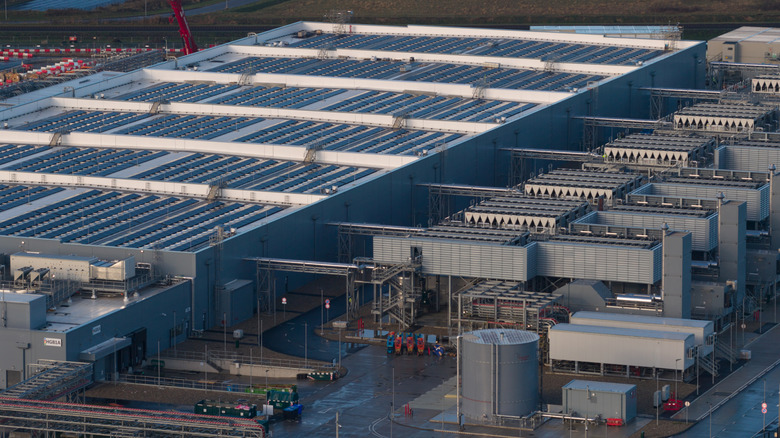
Traditional data centers typically use a “fat tree” network structure. In this model, data flows up and down a stack, with powerful server clusters at the top capable of mitigating bottlenecks caused by the linear nature of the “tree.” However, this structure requires extensive cabling and hardware, making it reliable but inefficient.
In contrast, the RNG system allows data to travel across a larger number of random routes, creating multiple alternative paths between any two points. The challenge lies in implementing this idea with physical cabling. The ShuffleBox addresses this by randomly shuffling physical cables according to the RNG concept. Optical Circuit Switching (OCS) plays a crucial role in this design, transmitting data as light through fiber optic cables. This method is more efficient than traditional transmission because it eliminates the need for data to stop at various points, get converted to electrical energy, and then back to light.
Spraypoint complements this by distributing data packets randomly across multiple neighboring routers instead of sending them along a single best path. These packets are then picked up by intermediate routers ready to forward them to their destination. This approach helps spread traffic out, reducing congestion and avoiding crowded hotspots.
Why the breakthrough is so important

Reducing the power draw of data centers is essential to prevent environmental damage and avoid overloading the power grid. For example, there are currently 30 data centers seeking construction permits in New York State. If all are built, they would consume more power than the nation of Ireland, placing additional strain on an aging grid already suffering from years of deferred maintenance and underinvestment.
This issue is not unique to New York. A Bloomberg analysis revealed that customers living as far as an hour’s drive from new data centers could face utility bill increases of up to 267% compared to five years ago. This means nearly tripling utility costs that are already reaching record highs. Although not a complete solution, Amazon’s RNG technology could make a significant impact, given the company’s massive energy usage and the revelation that it operates twice as many active data centers as previously estimated.
The same report highlights how Amazon’s data centers are driving the construction of new gas plants and extending the life of existing coal plants that might otherwise have been retired. The scale of these facilities also raises concerns for nearby residents, with Meta’s Louisiana data center spanning nearly 70 football fields in length. Additionally, the environmental impact is considerable, as a separate 2025 report showed that Amazon, Google, and Microsoft are operating and expanding data centers in some of the driest regions of the world, where they rely heavily on water for cooling.