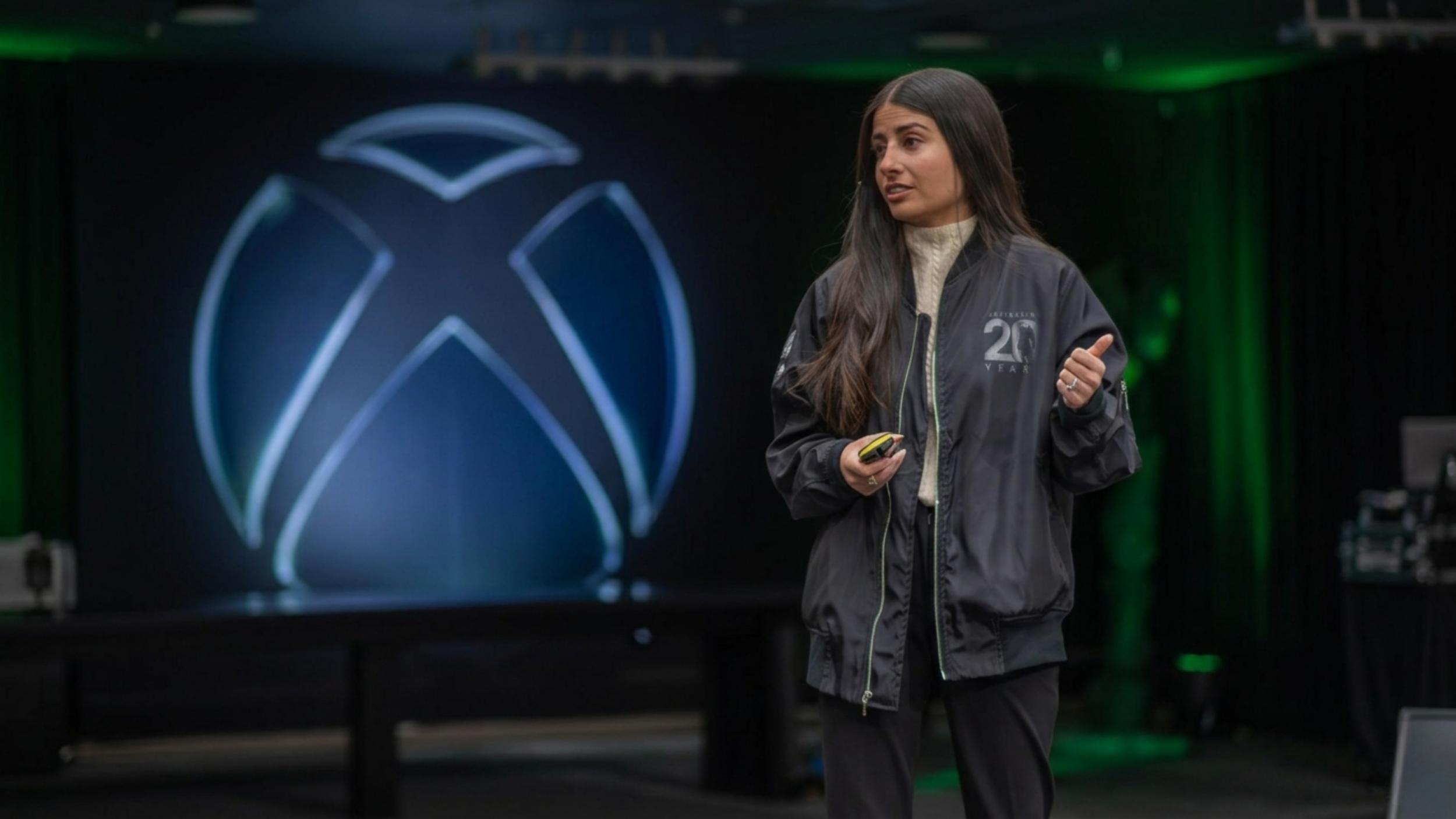
Microsoft’s Xbox division is reportedly preparing for significant job cuts in the coming months, with a direct internal memo from its new chief executive outlining the reasons behind the decision. Asha Sharma, who took over the gaming business in February, has informed staff that years of rapid expansion have placed the unit under financial strain, stating that the current path is unsustainable.
The memo, co-signed by Xbox chief content officer Matt Booty and published on the company blog on Wednesday, 10 June, avoids using the term ‘layoffs’ directly. However, Bloomberg reported that substantial staff reductions are expected to begin in July, following the end of Microsoft’s fiscal year on 30 June. Marketing and other budgets are also set to face cuts.
What gives the document its weight is its honesty. Sharma walked employees through figures that she described as “surprising and even frustrating” to discover.
A 3% Margin and a $20B Spending Problem
One of the main concerns is the margin. Xbox expects to finish the fiscal year at approximately a 3% accountability margin, an internal metric used by Microsoft to measure profitability, and this figure is lower than the previous year. For a business of Xbox’s scale, this is a very slim margin.
Then there is the spending. Excluding the Activision Blizzard King acquisition, the company has invested more than $20 billion (about £15 billion) into content, platform, and hardware subsidies over the past five years. During the same period, annual revenue decreased by nearly half a billion dollars, close to £374 million. “Going forward, this cannot continue,” Sharma and Booty wrote.
Microsoft’s most recent quarterly filing provides further clarity, as Variety noted. Gaming revenue fell 7% to $5.3 billion (roughly £4 billion) in the quarter ending 31 March. Hardware revenue dropped 33% as fewer consoles were sold, while content and services revenue declined by 5%.
Xbox Caught in a Hardware Component Crisis
The most pressing issue, however, lies within the consoles themselves. Sharma described a hardware component crisis that has worsened since her arrival. When she joined in February, the price Xbox paid for console storage was already more than double what it cost the previous autumn. These costs have since doubled again.
Looking ahead to the 2027 holiday season, the memo warns that component prices could climb to more than five times what the company paid only two years earlier, with memory costs following a similar trend. While the entire industry is experiencing this squeeze, Sharma argued that Xbox has been hit harder than most due to decisions made over the past five years. The result is uncomfortable for any hardware maker: the company cannot build as many consoles as players want to buy.
That admission helps explain the strategic shift announced days earlier. At Sunday’s Xbox Games Showcase, Sharma’s first as the division’s leader, she confirmed that Gears of War: E-Day and Clockwork Revolution would launch as Xbox console exclusives rather than appear on rival systems. GeekWire noted that a PlayStation 5 version of the new Gears of War had been in development and was scrapped before the announcement.
What the Xbox Reset Means for Staff
Sharma’s tone was not entirely bleak. She highlighted early signs of recovery during her first 100 days, noting that platform teams had shipped more updates than in the entire prior year and that Game Pass had begun growing again after eight months of decline. Xbox now has more active partners than ever, she said, and franchises that are breaking records in television and film.
Still, the framing she chose is telling. Going forward, she wrote, the real competition is attention, not any single rival console. There are simply more games, shows, creators, and apps chasing the same hours than at any point before.
For Microsoft, the math is the message. A division drawing over a billion players and 72 billion hours of play a year is, by its own accounting, barely turning a profit. The reset Sharma has ordered is meant to change that, and for some of the people reading her memo, it will arrive as a redundancy notice. The company has not said how many roles will go or commented on the news of layoffs as of this writing.
Read the full memo, titled ‘Next 100 Days: XBOX Reset,’ below:
Team,
Over the first 100 days together, we have started to revive XBOX.
Our platform teams have already shipped more updates in the last 100 days than during the prior year combined. We now have more active partners on XBOX than ever before. Our Game Pass team set to work fixing our offering and after 8+ months of decline, our service has started to grow again. And through Player Voice, we have a 24/7 channel to hear directly from players, creators, and developers.
With the XBOX Games Showcase and the return of FanFest, we brought together hundreds of millions of fans globally. We reintroduced exclusives with Gears of War: E-Day in 2026 and Clockwork Revolution in 2027. Players can continue to expect signature exclusives from us every year. In parallel, Playground Games reminded us that established franchises can achieve incredible new highs.
These results are early, but they demonstrate what is possible when we move faster, stay close to our community, and align behind a shared vision. We have made mistakes, and will continue to make them, but what matters is that we listen, learn, and adjust the course where needed. Remember, our fans are rooting for us.
Now we start the next 100 days. It is important to have both optimism and realism as we work to reset the business.
Here are the realities that we need to navigate:
1: Over 1 billion players choose to play XBOX and our games each year, for a total of 72 billion hours across Console, PC, Mobile, and Streaming (excluding much of China and a few other properties). Our franchises are also among the largest and most beloved globally and are now breaking records in TV and film. Going forward, our competition is attention. There are more great games, TV series, franchises, creators, content formats, apps, etc., than ever before.
2: We will end this fiscal year at about a 3% accountability margin, down year-over-year. Excluding Activision Blizzard King, over the past five years, we have spent over $20 billion on ongoing investments in our content, platform, and hardware subsidy, but our annual revenue has declined nearly half a billion during that time. Going forward, this cannot continue.
3: We are in a hardware component crisis. When I joined as CEO in February, the price we paid for console storage components was over 2x as high as we paid last fall. These costs have since doubled again. And as we plan for the 2027 holiday season, we expect another significant increase, taking us over 5x the prices we paid only two years earlier. Memory costs have followed a broadly similar trajectory. While the entire industry is facing a components crisis, we believe we have been impacted more greatly than many of our peers due to the choices we made over the last half decade. We are currently unable to make as many consoles as players want to buy, and we need a new business model and partnerships for hardware as we remain committed to Helix.
4: We expanded our studio system when we needed a pipeline of content to meet multiple strategies across subscription, streaming, and devices. In the process, we have found ourselves over extended as we executed on changing strategies in a landscape of more readily available content. We are the fortunate stewards of industry-defining franchises that have enormous potential and player demand, but we have not adequately funded them to compete and win. At the same time, as we saw this past weekend at Showcase, a reliable pipeline of first- and third-party exclusives and new IP are critical to our success. We need to reassess the balance between these and our investment priorities for the next 5 years.
5: Our current platform infrastructure is not built for the battle ahead. Our systems are overly complex, spanning hundreds of dependencies, which hinders our ability to move fast. We’ve become too reliant on vendors to operate our systems and must become more self-reliant as an engineering culture to build for the future. We must increase the value we ship to players while decreasing the time it takes to do so. Going forward, we’ll evolve and rebuild our stack and look at capabilities across all of XBOX and potential M&A to help us win in hardware, PC, mobile, and streaming.
For some of you, these realities will be surprising and even frustrating to discover. We won’t succeed by hiding hard truths, nor will we succeed by doing the same thing and expecting different results. Like the ‘everyday wins’ mentality from the first 100 days, we will sprint to make progress against hardware, content, experience, and services together.
XBOX is one of the few places where people come not just to play, but to connect with others to create memories. With console at the center of how our showcase experiences are defined, Windows as one of the largest gaming platforms in the world, and incredible games under our roof as one of the largest publishers in the world, we have the foundation in place.
Let’s reset for a stronger XBOX and build the #1 gaming and entertainment company.
Asha and Matt