Exciting Developments for Total War: Warhammer 40K
After visiting Creative Assembly last year, I’ve been eagerly awaiting news about Total War: Warhammer 40K. On Sunday, June 7, the Emperor finally delivered. Not only did we get our most detailed look at how real-time battles will function in this sci-fi setting, but the game’s appearance at the PC Gaming Show 2026 also confirmed that a closed beta is on the horizon later this year – though an exact date remains unconfirmed.
Among all the upcoming games, Total War: Warhammer 40K is the one I’m most excited for. Seeing it in action and hearing that I’ll have the chance to play it by the end of the year has truly ramped up my anticipation. I’m working through it the only way I know how: by watching the reveal again and breaking down every detail.
A New Era of Combat
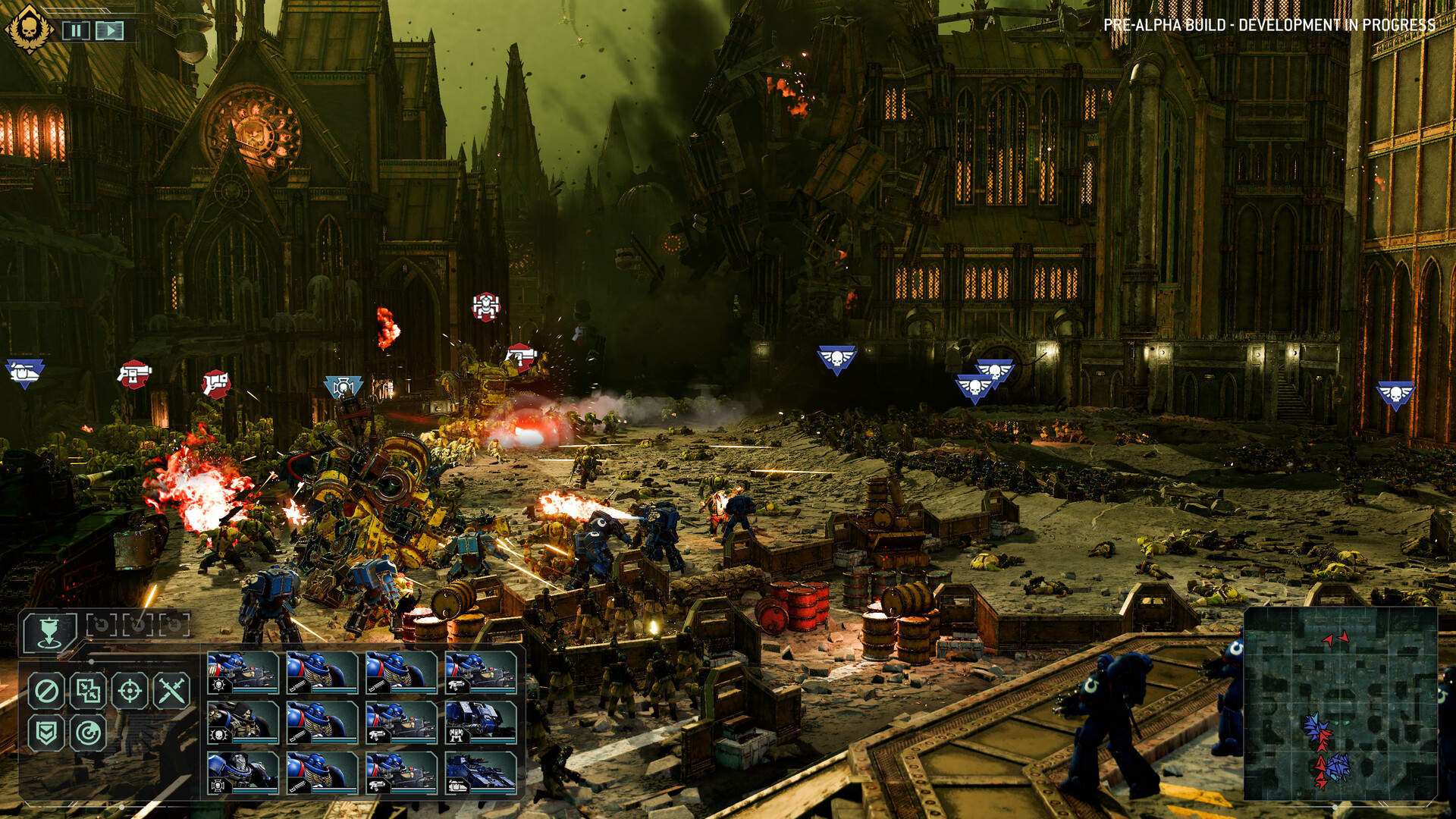
While a teaser trailer for Total War: Warhammer 40K was released during last month’s Warhammer Skulls showcase, its focus on narrative and lack of in-game footage suggested we’d be waiting a while longer to see more of the game itself. However, the PC Gaming Show 2026 brought a surprising amount of alpha build gameplay, offering plenty to explore.
Within the first 30 seconds, we’re introduced to a battle between the Astra Militarum and a horde of orcs. The scene takes place on what appears to be the outskirts of a war-torn hive city. The map is much more textured and urban-focused than what we’ve seen in previous Total War games. Charred ruins are visible against a bridge crossing, giving the impression that battles will be designed to encourage deeper engagement than the quicker clashes seen in Total War: Warhammer 3.
Strategic Ranged Combat
The most significant detail lies within the game’s UI, revealing how Creative Assembly has integrated ranged combat. Guns are a key element in the developer’s Warhammer (Old World) trilogy, and past titles like Total War: Napoleon and Empire have successfully implemented gunpowder lines. However, fans have long wondered how 40K’s advanced guns, often used alongside melee weapons, would interact with the series’ more medieval-style frontline clashes.
Here, we see that while most units have ranged attacks as an option (at least for the Astra Militarum), each has a specific firepower value for light, medium, and heavy targets. For example, Cadian Shock Troopers have 5/10 effectiveness against light-class targets, but this drops to 1/10 against medium and heavy foes. In contrast, a tank commander has 9/10 effectiveness against light targets and 10/10 against medium armor, but only 6/10 against heavies. This system could encourage more dynamic back-and-forth in battle, allowing beefier units like Space Marines to close in on small-arms fire without being destroyed, while Cadians rely on a combined arms approach, using harder-hitting vehicles to protect their gunlines from melee-centric infantry.
Enhanced Strategic Depth
If anything, I’m beginning to believe that 40K’s battles could be more satisfying for strategy enthusiasts. With so many options for melee versus ranged tactics, real-time fights should be more strategic and slow-burn. The importance of cover will force players to spread their forces more thinly and pay attention to wider battle lines. Additionally, environment destruction and tools for fast-moving attacks (such as Space Marine drop pods, orbital strikes, and jetpacks) may encourage more layered formations rather than a single frontline clash.
Looking Ahead
While I still have many unanswered questions about Total War: Warhammer 40K’s campaign map and factions, its latest reveal has already sparked my imagination. I’ve already registered for the closed beta, which you can do here, and even though it’s scheduled to launch later this year, the wait may well be agonizing. However, with the biggest DLC for Total War: Warhammer 3 now within reach, there’s going to be enough content to keep us busy in the Old World for a long time to come.