Flock Safety is a company that many people may not have heard of, but it’s likely familiar with them. Based in Atlanta, the company develops automatic license plate readers, typically mounted along roadsides. However, these devices go beyond just capturing license plates.
One of Flock’s features, called Vehicle Fingerprint, can track detailed information about a vehicle, such as its make, body style, roof rack, and even bumper stickers or decals. Because of this, the license plate becomes almost secondary, which is the main selling point for law enforcement—just a quick glimpse of a car is enough. Any missing details can be filled in using other data points.
This is just the beginning, as the same technology allows for drones that can follow vehicles from above and even identify individuals in a crowd based on their clothing. Worse still, there have been instances where officers have misused this technology.
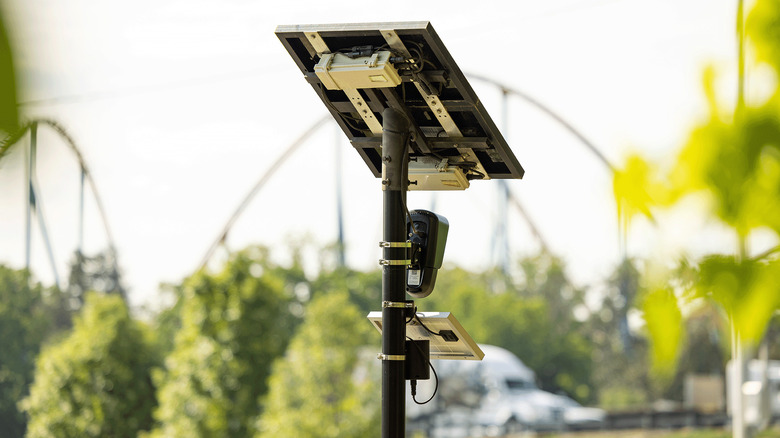
The Falcon camera system powers all of this. The standard unit can capture vehicles moving faster than 60 mph, with a view spanning two lanes of traffic. There’s also the Falcon Long Range variant, designed to monitor high-speed traffic while keeping an eye on a third lane. So far, over 80,000 of these units have been installed across the United States.
The software pulling the strings
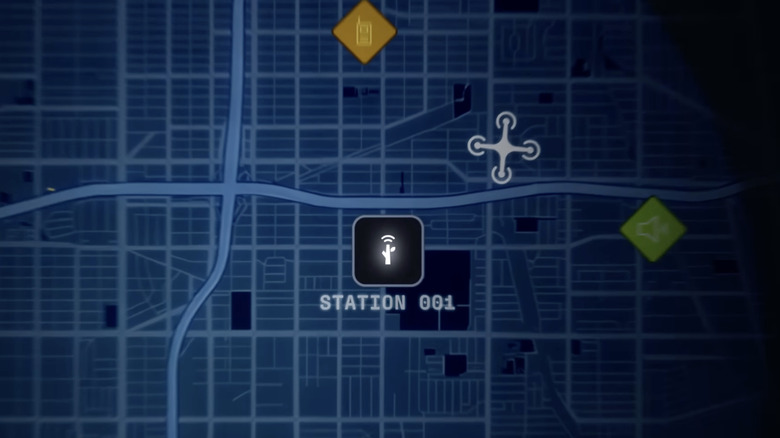
All this hardware would be less useful without the right software. One of Flock’s more striking examples is a tool called Nova, which the company markets as a search engine for law enforcement. It aggregates open-source intelligence, public records, and data from dispatch systems, offering officers a single search bar for all of it. Flock even considered integrating breached data from the dark web, though it ultimately decided against it. Still, even without that, Nova can do a lot.
An officer can look for vehicles traveling together, helping identify clusters of cars that appear repeatedly, treating them as a group. There’s also a separate tool called multi geo search, which tracks a single vehicle across different times and locations, using the clues gathered by the system.
Then there are the drones, part of a program called Drone as First Responder. These drones launch automatically when a 911 call comes in, following a person or vehicle at speeds up to 60 mph. Another feature, Freeform, lets an officer describe someone in detail—down to what they were wearing—and the software finds a match. Notably, Flock claims it does not use facial recognition.
All that watching comes at a cost
Despite the concerns, police departments love these cameras. Supporters argue that the cameras act as a force multiplier for understaffed departments, and some officers have linked them directly to drops in violent crime. However, the side effects of constant surveillance and the scale of the operation raise serious issues.
In Oakland, for example, 293 automatic license plate readers connected to the police feed recorded over 638 million reads in 2025. Yet, very few of those flagged actual crimes. Most of the alerts were related to stolen plates.
The most troubling aspect is the human factor. In one case, a chief in Sedgwick, Kansas, ran his ex-girlfriend’s plate 164 times over four months. He was eventually stripped of his badge, but he’s not alone in misusing the system.
Another case involved a man in Norfolk, Virginia, who discovered that Flock had logged his car 526 times—about four passes a day—for four months. Due to these issues and other concerns, several cities have started to distance themselves from Flock. Mountain View, California, for instance, shut down its Flock deployment after learning that the company was secretly sharing data with agencies that hadn’t approved it. Over 45 cities have now cut ties with Flock’s systems. Public backlash has also increased, with more cases of vandalism targeting Flock cameras.
For those interested in the latest developments in technology and automotive trends, consider subscribing to a free newsletter for regular updates, expert guides, and helpful tips delivered straight to your inbox. You can also add this source as a preferred search option on Google.