Tsutomu Nihei’s Evolution in Manga
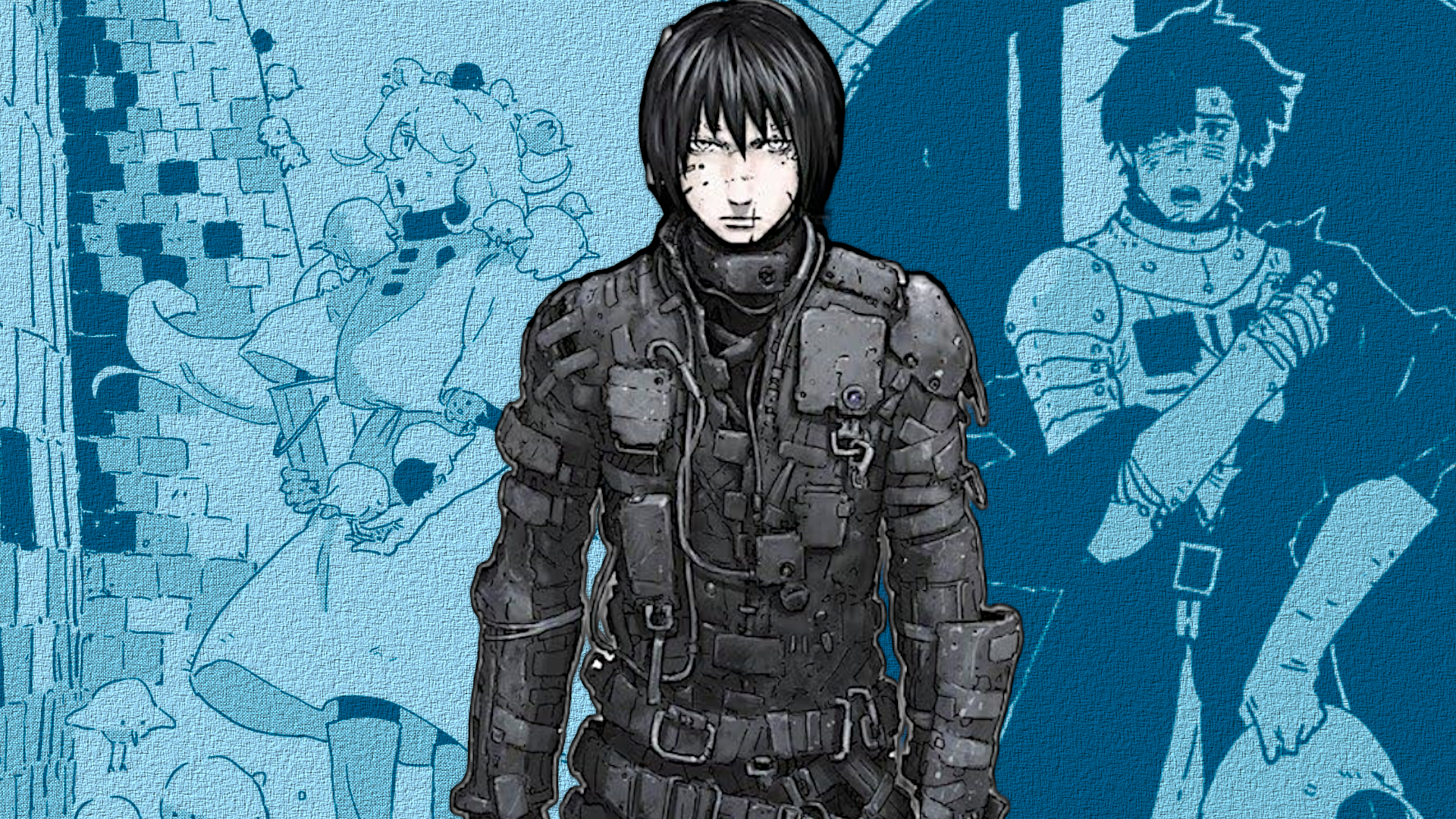
For many manga readers from the late 1990s to the present, few names are as synonymous with great science fiction manga as Tsutomu Nihei. His work has brought to life a range of fantastic stories, and his architectural background has played a significant role in shaping his iconic renditions of colossal megastructures that often overshadow the significance of any characters inhabiting them. While his most striking work is arguably BLAME!, his subsequent manga have charted an interesting evolution for the visionary creator, focusing more directly on linework without compromising his concepts.
This led to a prequel, NOiSE, additional sci-fi works such as Aposimz, and the glorious mecha hit Knights of Sidonia. Naturally, with such an established sci-fi presence, Nihei has garnered a dedicated following domestically and internationally for what he brings to the table. This includes his awe-inspiring backgrounds and gift for visual storytelling, along with a knack for ultra-violent action, distinctive character designs, and absolutely underrated creature design.
It’s something Nihei has certainly brought to the table briefly for smaller-scale projects that didn’t take off like Dead Heads or doujinshi contributions, but beyond writing for Kaina of the Great Snow Sea, his greatest genre change wasn’t until 2023 with the dark fantasy epic Tower Dungeon. Despite an outwardly drastic genre change, there are naturally plenty of genre-independent details of Nihei’s work when one stops seeing the forest for the trees.
Introducing Tower Dungeon
Instead of an incomprehensible Megastructure constantly growing in scope, Tower Dungeon features a central floating Dragon Tower, often obscured by fog, tall enough to pierce the clouds and stand among the stars. The Dragon Tower’s mere presence seems to bring a laundry list of calamitous monster threats to wherever it is summoned. It may seem like a drastic genre change, but plenty of Nihei’s usual hits are present in this series, and much like his other works, it’s not discussed nearly enough.
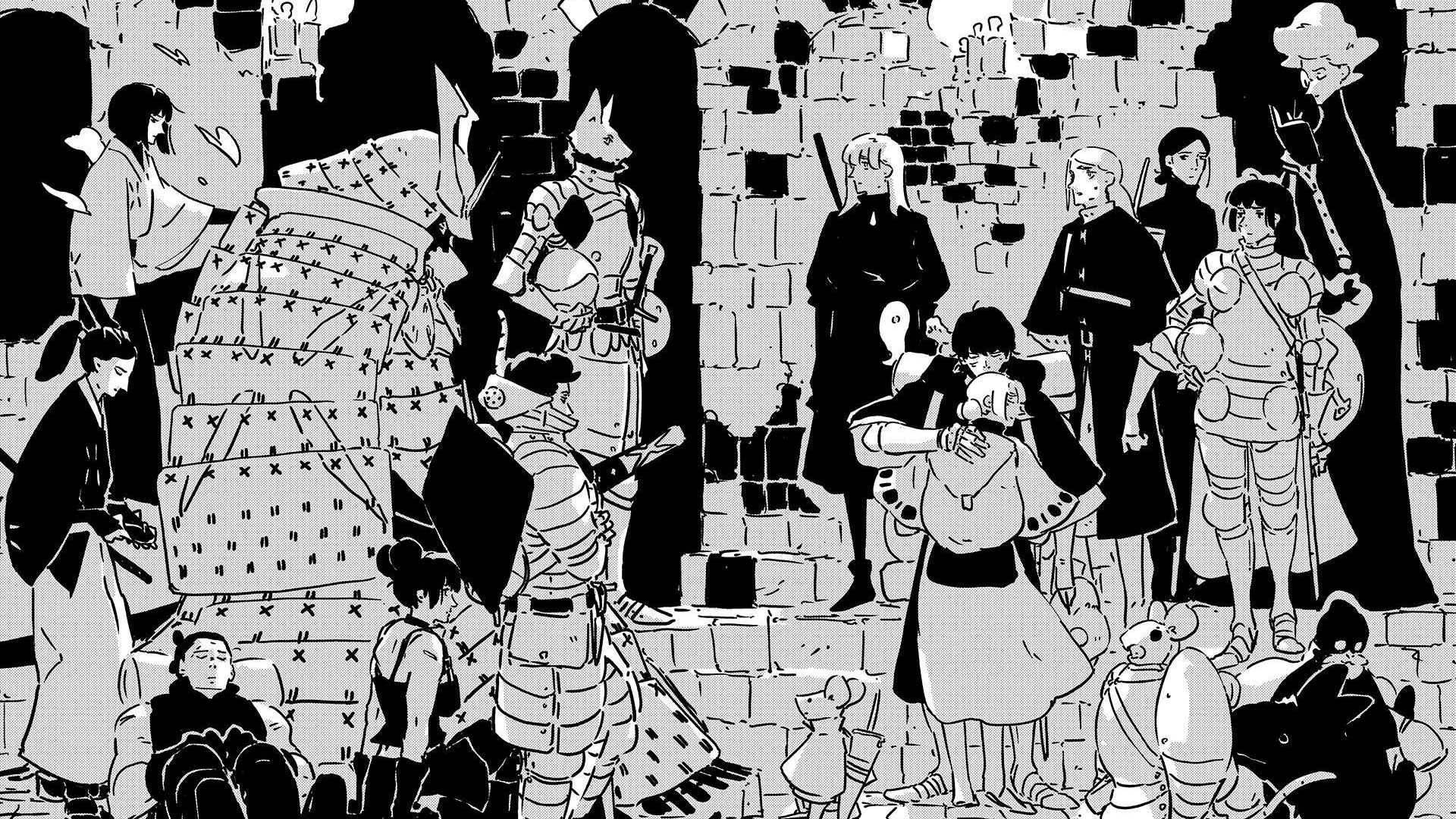
Tower Dungeon introduces readers to its story in the simplest of terms: a mysterious creature possessing the story’s central king captures the princess and summons the manga’s central tower. Inhabited by monsters of all sorts, including basilisks, golems, and other dangers including a central Necromancer antagonist, the rescue effort is so desperate it’s conscripting local villagers to join the efforts, where Yuva enters the picture.
Yuva’s Journey
Yuva is initially teased as a bumpkin, although, much like many of Nihei’s protagonists, whether it’s Sidonia’s Nagate, Biomega’s Zoichi, or BLAME!’s Killy, Yuva quickly reveals a talent that sets himself apart from his cohort. Mysteriously able to carry astonishing amounts of weight, Yuva quickly gets designated as the squad’s pack mule, although, again much in the Nihei style, there is a reason for this ungodly strength.
Yuva is rather dense and somewhat more expressive than other Nihei protagonists, able to win over even the most hardened or resentful allies, even if his tendency to think unfiltered thoughts gets him in trouble thanks to Thought-Linking Rings later in the series. Yuva’s journey with the party quickly nets him praise for his reliability and surprising hardiness, winning over even the tsundere fire mage Lilisen, among other memorable allies like the anthropomorphic rodent Churafi, royal academy president Iscale, and more.
These distinctive characters and idiosyncratic personalities can certainly appeal to fans of other iconic fantasy hits like Dungeon Meshi, making Tower Dungeon surprisingly accessible while pulling no punches in its world-building. As the party scales each new floor, they risk deadly confrontations with the Dragon Tower’s endless inhabiting monsters, as the big-picture plot continues to unfold.
The Genre Shift Works
The result is an impressive, yet surprisingly well-executed shift in genres, while preserving Nihei’s usual stylistic hallmarks. The Dragon Tower’s reveal beyond an initial, smaller fortress red herring is an awe-inspiring sight, too tall to reasonably be captured in one panel. The creature designs, particularly of the basilisks and the subjugated undead, known as necromites, take up mighty presence for each panel in which they feature.
But perhaps there’s a simpler reason why the genre change in Nihei’s latest manga works so well. Without getting too heavy into the spoilers, Tower Dungeon works so well because Nihei’s style imports incredibly seamlessly into a sprawling, dark fantasy world. After all, his body horror and impossible architecture elements are certainly popular in dark fantasy just as they are in sci-fi and cyberpunk, with Tower Dungeon certainly making a neat proof of concept as a Hidetaka Miyazaki game world just as much as it does for a manga for Nihei.
While concepts like brutalism in BLAME! naturally don’t work here, Nihei instead focuses on typical medieval archways, staircases, and masonry to achieve a familiar decor while still committing to impossible architecture. But while graviton emitters are swapped for heater shields, bastard swords, and strange MacGuffins like the Azza-Lugh-Novael, plenty of Nihei constants continue to exist in Tower Dungeon.
Narrative Challenges Are Handled Well
One of Nihei’s few shonen serials, Tower Dungeon hardly conforms to recent trends geared toward this target demographic, much like his idiosyncratic seinen works before. Tower Dungeon is still ultraviolent when it needs to be, with many of Nihei’s usual hallmarks staying relatively intact. But still, one can appreciate the ways in which this series appeals to its target audience while juggling multiple impressive features.
This includes occasional shifts in focus to other groups as they converge with Yuva’s group, balancing exposition with Nihei’s flair for visual storytelling, and keeping such an intimidating premise fun and engaging. Yuva’s squad, eventually becoming Neo Squad Seven of the Royal Warband, grows in strength of numbers as well as diversity as members of all races and statures begin joining.
This growth even complicates their perception of the villain and how they perceive his species, especially with the introduction of Aridellia. But crucially, this is executed well, with each new group given enough space for a proper introduction, giving real weight to their survival in the series, before merging them with Yuva’s group. Even Yuva’s younger sister, Funapa, gets a key reunion while being carefully integrated into the plot, contributing to a lovable ensemble cast.
A Fun and Accessible Reading Experience
Tower Dungeon is also impressive as, unlike less recent Nihei manga, the series certainly takes a more minimalist approach while still conveying a grand scale in its visuals, in the interest of balancing it with dialogue. It results in an accessible reading experience for younger viewers, without feeling like it’s talking down to the audience. Nihei takes his time introducing various plot elements, like Drakmetamor heritage and various races, including the cat-like Nyabilians, without overwhelming the readers.
Spread through the action in a monthly manga, there’s enough space for readers to absorb the story’s lore, and enjoy its action and vision between key conversations. Finally, Tower Dungeon is simply fun to read thanks to a great cast of characters. It’s loaded with memorable moments featuring Lilisen, and Churafi is an adorably pure Ratwick archer utterly unfamiliar with anatomy to a comical degree; everybody gets a little bit of focus, and it’s fun to pick favorite characters.
At the center of it all is Yuva, who can go from having a healthy distrust of Lilisen’s violent attention-seeking tendencies, to being surprisingly badass when the moment calls for it, whether tanking projectiles from Royal Warband deserters, or pouring his weight in salt on terrifying slime opponents to take them down.
[TOWER DUNGEON]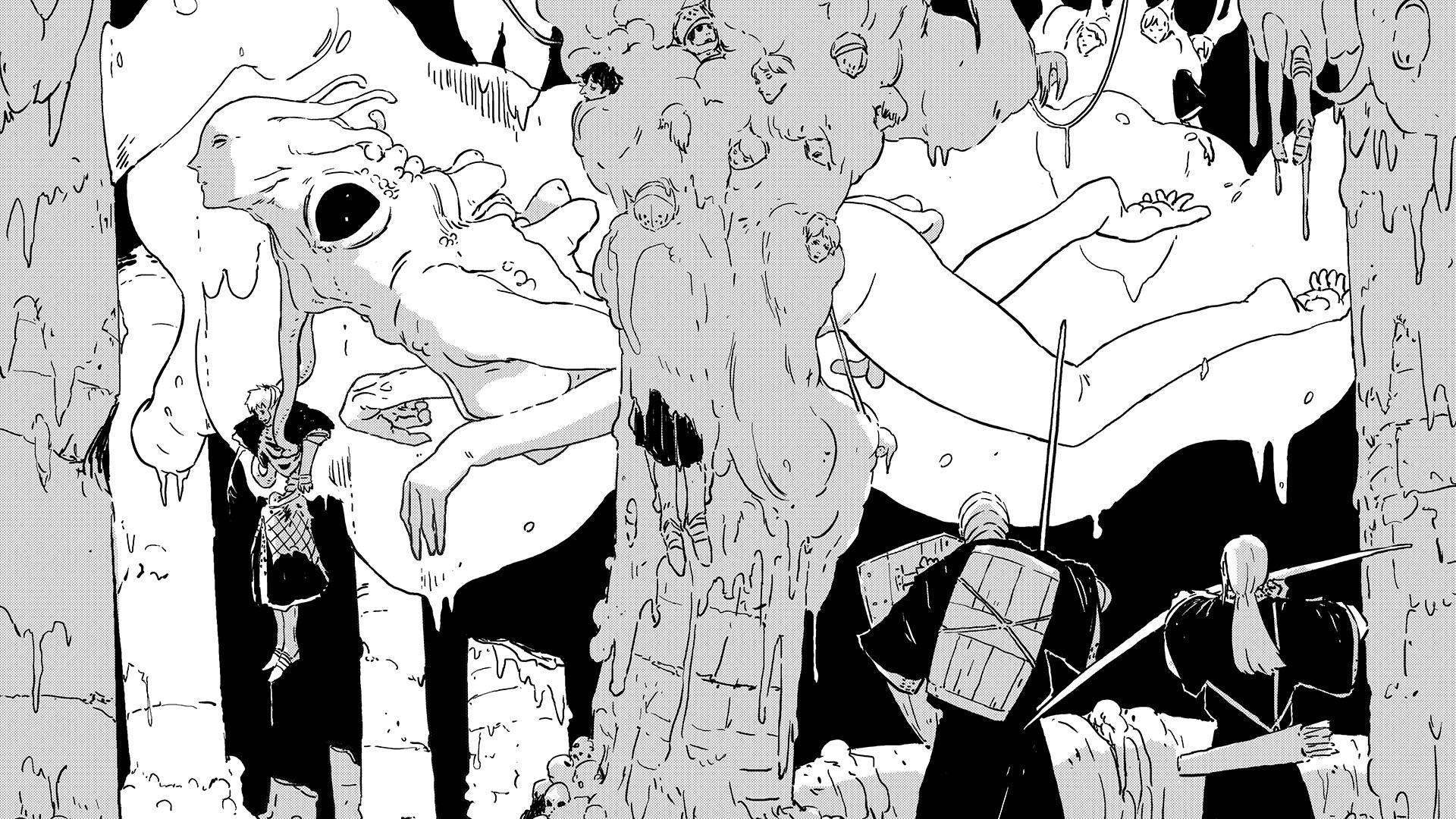
A New Chapter for Nihei
Tower Dungeon may be a significant genre change for Tsutomu Nihei, but with so many elements in his favor, it’s run for over two years and certainly met the bar for quality set by his previous works. It may lack the visually immaculate details of BLAME!, but in its place is an achievable yet visually dense fantasy world, still embodying the impossible architecture of the Sidonia vessel, but with significantly more archways and shabby wooden stairwells.
It’s a brilliant series with enough promise to continue in the months, or perhaps years, ahead. Tower Dungeon is available to read on Kodansha’s K Manga service, as well as in print via local and digital comic book retailers.
[TOWER DUNGEON]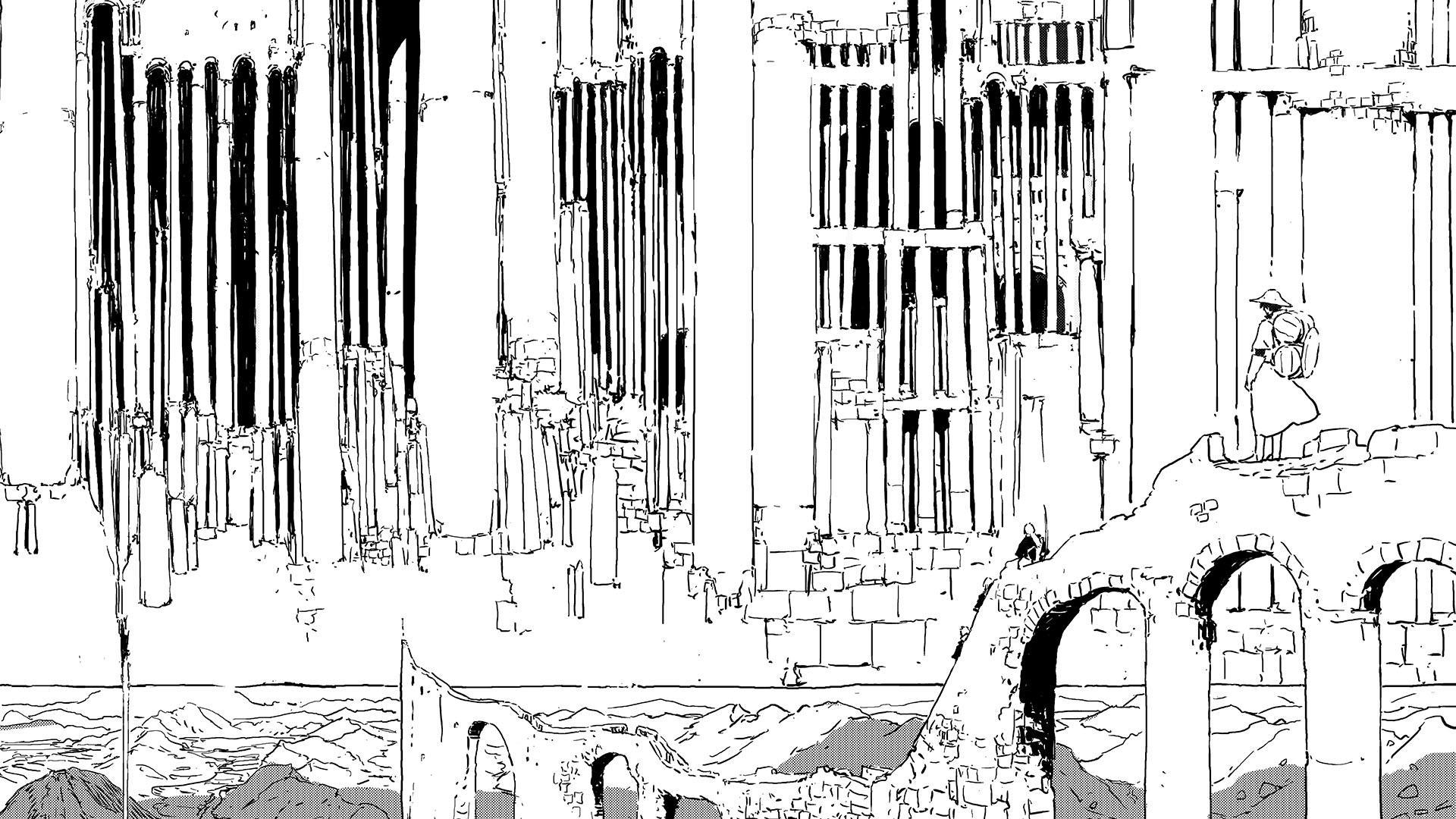
[TOWER DUNGEON]