
A Nostalgic Return to Arcade Racing
The new arcade racer 4PGP has already made its way to the Nintendo Switch 2, and it brings with it a sense of immediacy that few modern games can match. The name itself is straightforward—’Four-Player Grand Prix’ tells you exactly what to expect. When you pick ‘Quick Race,’ you’re instantly dropped onto the starting grid, the lights count down, and the race begins without any instructions or onboarding. It’s a return to the days of the ’90s, where racing was all about speed, skill, and pure fun.
Circuit Design: A Throwback to the ’90s
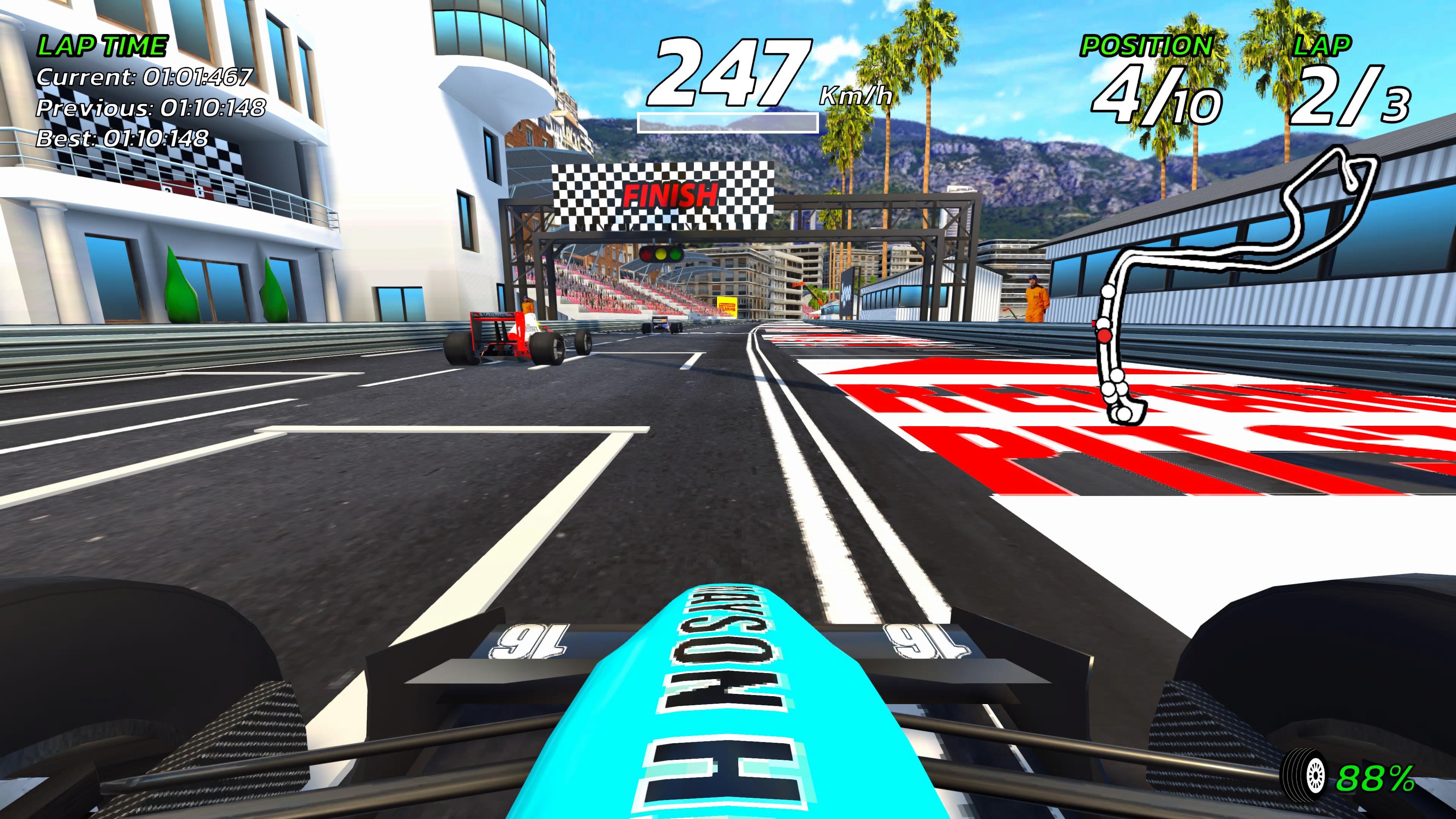
The circuits in 4PGP are loosely based on real-world tracks but are designed with the tight, quick, and essential nature of classic arcade games in mind. They follow old-fashioned logic, where corners can be glided through and memorized, creating a rhythm that feels reminiscent of Sega and Namco titles like Daytona or Ridge Racer. Once you get the hang of it, you’re stringing bends together in a way that echoes those iconic racers from the past.
Controls and Visuals: A Blend of Old and New
The controls in 4PGP are another nod to the ’90s, with acceleration and braking assigned to face buttons by default. This might feel unfamiliar at first, especially if you’re used to triggers or more modern controllers, but it’s a deliberate choice by the developers to make the game feel authentic to the era.
The visual design also reflects this retro influence, combining the bold color grading of Dreamcast-era racers with the clarity and performance of a modern game. While it draws inspiration from titles like Sega Rally and Daytona USA, 4PGP doesn’t simply copy the look—it sharpens the aesthetic, avoiding the overly polished and sterile realism found in many contemporary racers.
Performance and Gameplay: Smooth and Focused
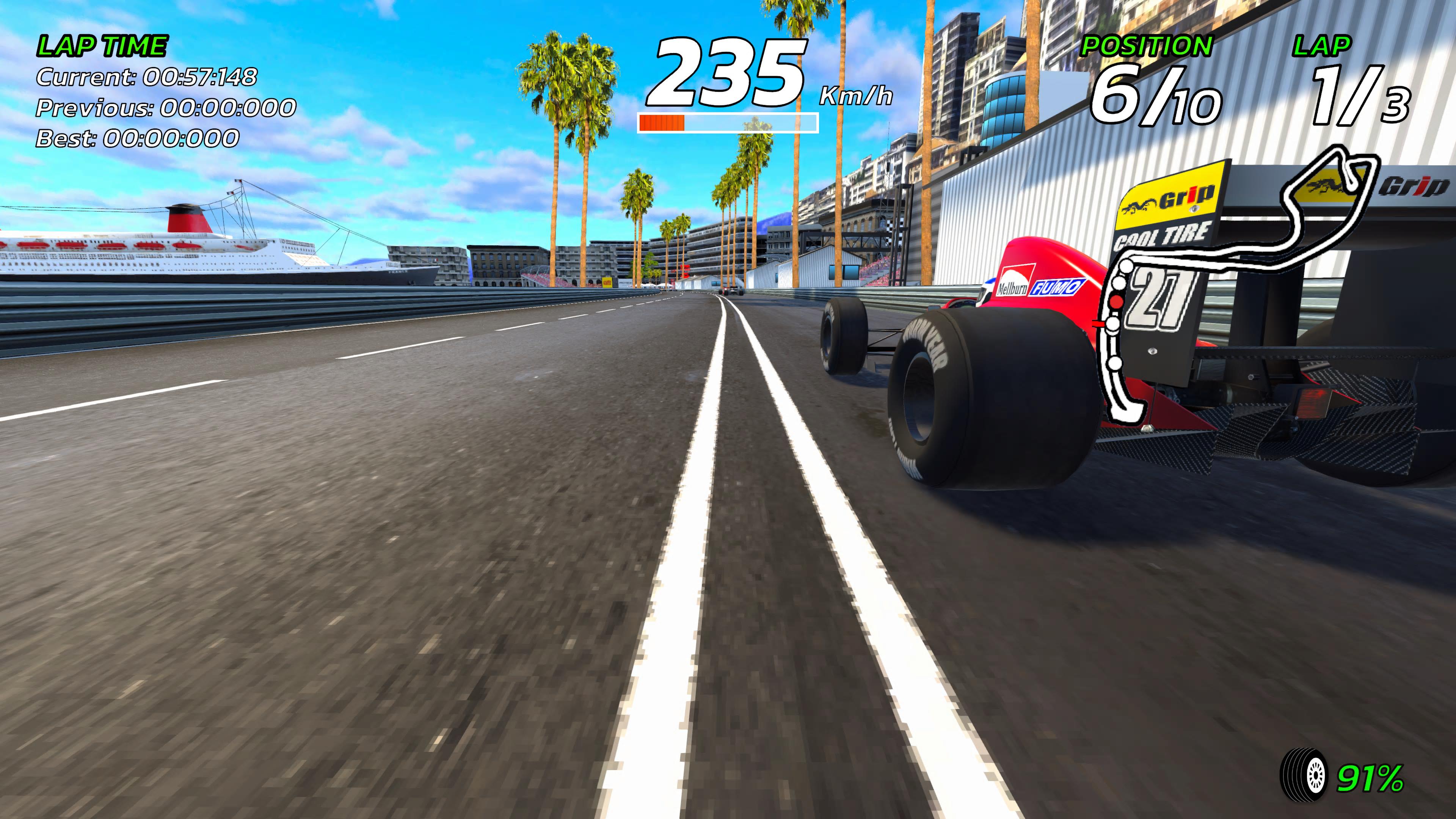
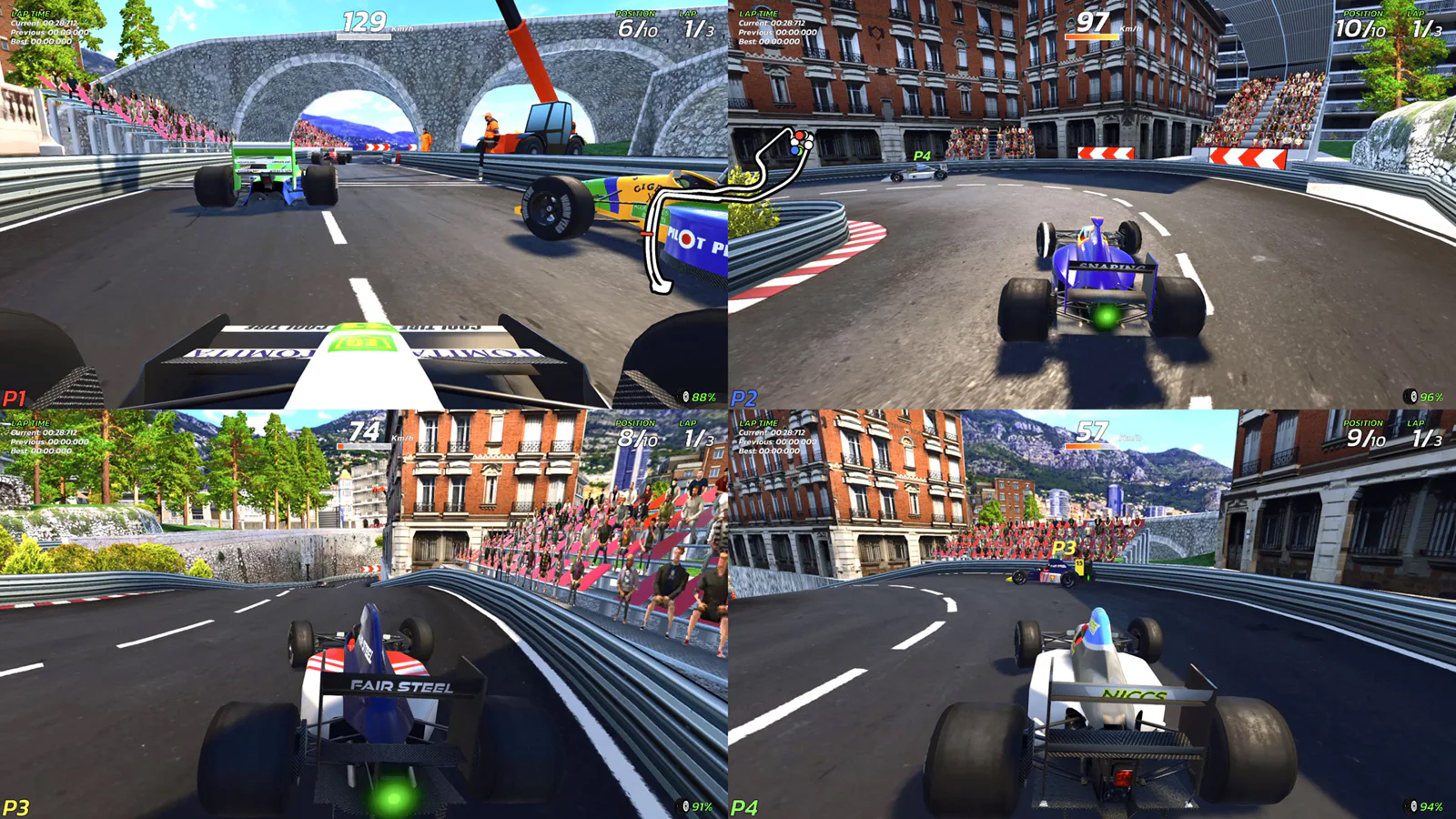
Running on a customized version of Unity, 4PGP is optimized for performance, delivering a smooth experience even when four players are on the same screen. The game’s handling and speed have a snap to them that becomes apparent only when you play with others. This focus on couch play sets it apart from many modern racers that prioritize online modes.
The game also incorporates some modern elements, such as tire wear and slipstreaming, which add depth without compromising the core gameplay. With 14 circuits to master in the Championship mode, players can quickly learn the ropes, though the repetition may become evident over time.
A Lean and Focused Experience
4PGP is lean and focused, offering cinematic replays and in-race drama centered around mastering corners, overtaking, and shaving seconds off lap times. There are no dramatic crash animations or swinging camera angles, which might be a downside for some, but it aligns with the game’s overall philosophy of simplicity and clarity.
This is where 4PGP either clicks or falls flat. The repetition of mastering controls and tracks is the draw of old-school racing games, similar to titles like Ridge Racer or Monaco GP. If you enjoy this approach, you’ll find 4PGP to be a joy. However, if you prefer more complex systems or dramatic elements, you might find it a bit light.
A Trade-Off Worth Considering
At its core, 4PGP isn’t trying to compete with modern simulations like Forza Horizon 6 or build endless systems for complexity’s sake. Instead, it’s built around speed, clarity, and competition. While it’s fun to play solo in Quick Race or Championship mode, it shines brightest when played with friends in four-player mode.
If you’re a fan of retro arcade racing, 4PGP offers a refined and focused experience that captures the essence of the ’90s. It’s a celebration of simplicity, speed, and the joy of competition.