The Resurgence of Turn-Based RPGs
The director of Final Fantasy Resonance, Hiroto Furuya, has shared his insights on the growing popularity of turn-based RPGs. According to him, this trend is not just a passing fad but a reflection of the experiences of game developers who grew up playing these types of games. He points to titles like Clair Obscur: Expedition 33 as evidence that turn-based combat is making a strong comeback in the mainstream gaming scene.
Following the big reveal of Final Fantasy Resonance at the recent Nintendo Direct event, several developers have been engaging with the media to build excitement around the game. As a nostalgic throwback, the JRPG has sparked discussions about how old-school elements are being reimagined for modern audiences. One key aspect of this revival is the use of an HD-2D art style, which gives a fresh and contemporary look to a classic aesthetic. However, the other significant factor driving this trend is the resurgence of turn-based combat.
Furuya spoke with IGN about the reasons behind this shift. He noted that while Atlus has long been a champion of turn-based gameplay through titles like Persona, the recent success of games such as Clair Obscur: Expedition 33 and Baldur’s Gate 3 has made turn-based combat more prominent in the triple-A space than it has been in years.
For Furuya, the reason for this resurgence goes beyond just development trends. He believes that many current game creators are drawing from their own childhood experiences with turn-based games, leading them to incorporate these mechanics into their work.
“I feel like a lot of us creators who had grown up playing turn-based games are now creating games ourselves,” he explains. “It feels like there’s this general movement towards revisiting and potentially reassessing or reworking some of the experiences we personally had when we were younger.”
He adds: “When we’re talking about Clair Obscur, I believe they are creators who grew up playing JRPGs.”
Furuya also highlights that this relationship with past influences is not unique to video games. He notes that similar trends can be seen in anime and manga, where creators are revisiting and reimagining older works.
“Creators are now revisiting past projects, remaking them, and reimagining them,” he says. “That’s also potentially a factor that contributes to this kind of resurgence that we’re seeing right now.”
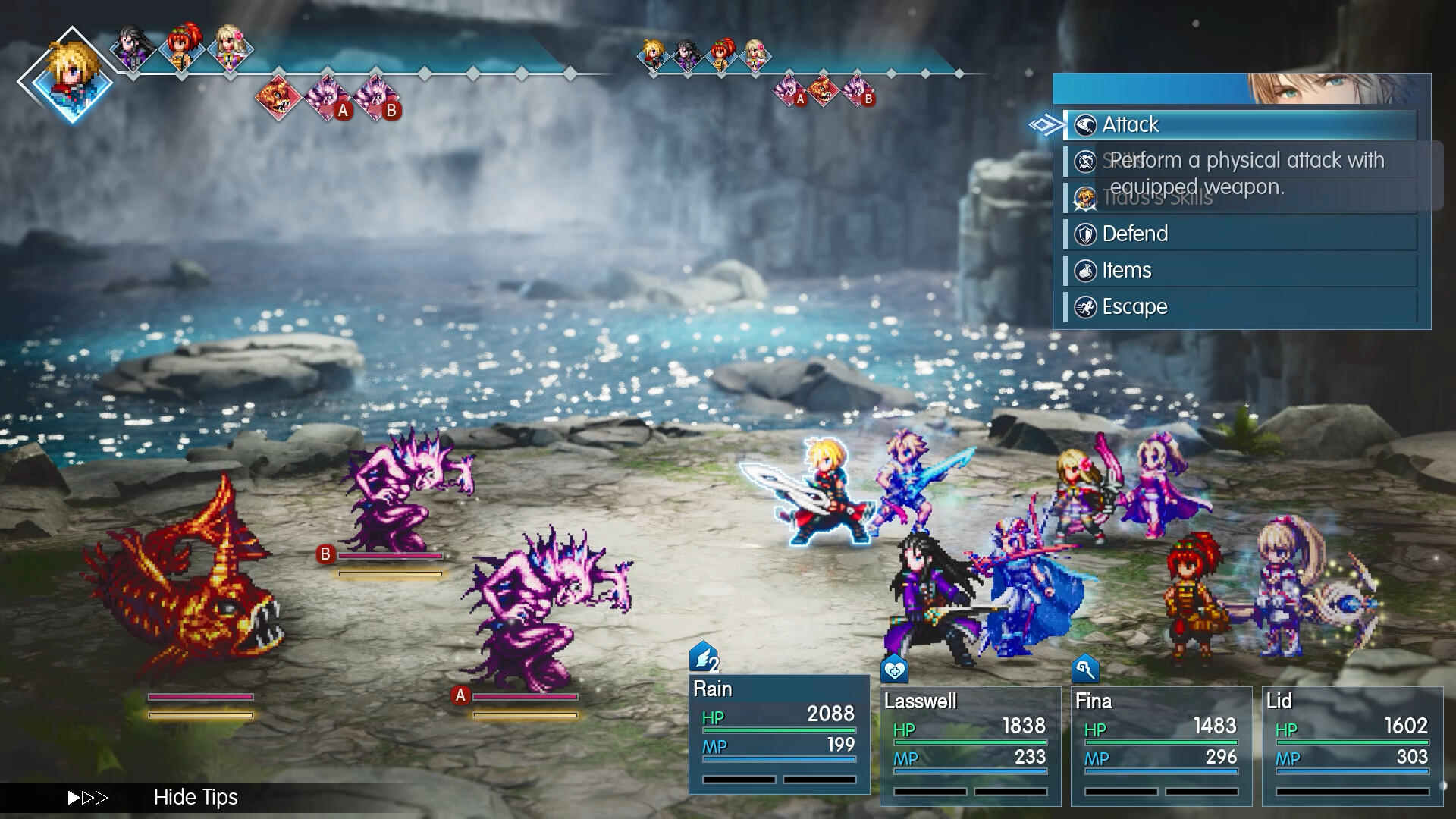
While it’s important to note that turn-based combat never truly disappeared—Persona continues to thrive—it’s clear that some major studios, like Square Enix, have gradually shifted toward real-time combat in their flagship titles, under the belief that this approach would appeal to a broader audience.
However, the recent success of games like Clair Obscur: Expedition 33 and Baldur’s Gate 3 shows that turn-based gameplay can still capture the attention of players. It’s also worth mentioning the many indie successes, such as Deltarune and Sea of Stars, which have found a dedicated fanbase. Team Asano, the studio behind Octopath Traveler and other HD-2D titles, is another example of how this style is thriving, even within the walls of Square Enix.
What makes Final Fantasy Resonance particularly intriguing is its attempt to bring back the roots of the Final Fantasy series. While it’s not a mainline title, it offers a glimpse into what a traditional Final Fantasy might look like if Square Enix chose to return to its core principles. Although we may have to wait years for what Final Fantasy 17 might look like, the current resurgence of turn-based combat and the influence of old-school JRPG fans on game development suggests an exciting future for the genre.
“Too good to become unplayable”: Final Fantasy Resonance exists because a JRPG veteran was “frustrated” players ignored their game the first time.