New Policy on Social Media for Minors
The United Kingdom is set to implement a policy that will prohibit children under the age of 16 from using social media platforms starting in early 2027. This decision mirrors a similar measure enacted in Australia in 2025, which aims to prioritize the well-being of young people over the interests of technology companies. However, this new regulation raises critical questions about how scientists can evaluate its effectiveness and determine whether it truly leads to positive outcomes.
Pete Etchells, a researcher at Bath Spa University in the UK, is involved in analyzing the effects of Australia’s ban and also serves as an advisor to the UK government. He acknowledges that there is currently no concrete evidence regarding the impact of such policies. “It’s such new territory,” he says, highlighting the challenges researchers face in understanding the long-term consequences of these restrictions.
Research Initiatives in the UK
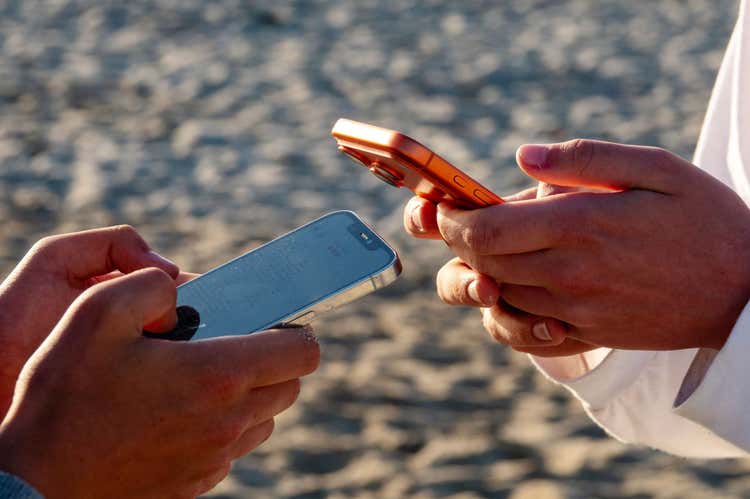
Leading the research efforts in the UK is the Wellcome Trust, which has launched the IRL Trial in Bradford. This initiative has recruited approximately 4,000 children aged 12 to 15 from 10 schools. These participants have installed an app on their phones to track their social media usage. For half of the children, the app also restricts access to social media applications. The researchers anticipate publishing their first results in the middle of next year, after the new ban has been implemented. Despite the timing, Catherine Sebastian from the Wellcome Trust believes the findings will still provide valuable insights for policy-making.
One of the key advantages of this study is its use of objective metrics rather than relying solely on self-reported data, which is common in many existing studies. Additionally, the few interventional studies that do exist are often too short to capture significant changes in mental health and related factors. “If you’re talking about big changes here around mental health and those sorts of things, you’re not going to see changes in two weeks,” Etchells explains.
Challenges in Evaluating the Impact
Australia’s ban was implemented in December, making it too recent to assess its long-term effects. Once national bans like these are in place, it becomes impossible to conduct controlled studies where two groups of similar individuals are compared based on their access to social media. Furthermore, evaluating the broader population before and after the ban will be challenging due to the influence of other social factors.
Sebastian is preparing for additional studies that may yield some results soon after the ban. The UK government plans to introduce legislation to Parliament before Christmas, with the policy expected to take effect in early 2027. The Wellcome Trust has invited 14 research teams to submit proposals on the effects of social media on young people’s well-being. These studies will employ various approaches to gather as much data as possible, aiming to synthesize the findings into a conclusive result.
Diverse Approaches to Data Collection
Some of these studies will follow existing groups of participants and regularly interview them about their mental health and well-being over time, both before and after the ban. Sebastian notes that while these methods can be insightful, they are often rigid. Other studies propose momentary assessments, where participants receive text messages asking them to complete brief surveys on the spot, capturing different types of data. Some may also analyze existing data, such as hospital admission rates or school absences, for further insight.
With time being a critical factor, Sebastian hopes that some results could emerge relatively soon after the ban. However, the findings are likely to be nuanced. For example, a social media ban could have some positive impacts, but also cause disruptions in the short term, such as the loss of online support networks.
Long-Term Implications and Future Adjustments
The effects of such bans are expected to evolve over the years or decades as today’s children and younger teenagers grow into adulthood without ever having accessed social media. “It’s not that this is a done deal,” says Sebastian. “Policies could continue to change over the longer term, and it’s possible that the findings from our study and others will help shape those policies iteratively.”
Concerns About the Effectiveness of the Policy
While the UK government is taking a proactive approach to address youth mental health concerns, some experts argue that the policy may be premature. Holly Bear from the University of Oxford told the Science Media Centre that a blanket age ban is a “blunt tool” and may not be supported by current evidence. However, she acknowledges that the Wellcome Trust’s research presents an opportunity to assess whether these measures will “help, harm, or neither.”
One potential challenge for the research and the effectiveness of the policy is the ability of users to bypass the restrictions. Early reports indicate that facial-recognition technology designed to verify ages online can be easily circumvented using screenshots of video game characters, and virtual private networks (VPNs) make it simple to appear as if one is located in a country where age checks are not required.
Surveys conducted in Australia by the Molly Rose Foundation, a suicide-prevention charity, found that 61% of 12-to-15-year-olds who had accounts on restricted platforms before the ban continued to have access to one or more of them. The organization described the UK’s potential adoption of a similar policy as a “high-stakes gamble” at this stage.
Understanding the Real Risks of Social Media
There are numerous alarming claims about the negative effects of excessive screen time on children and teenagers. Here is a guide to the real risks and what can be done to address them.
For those in need of support, the UK Samaritans can be reached at 116123 (samaritans.org), and the US Suicide & Crisis Lifeline is available at 988 (988lifeline.org). Additional resources can be found at bit.ly/SuicideHelplines.