A New Perspective on Neptune’s Moon Nereid
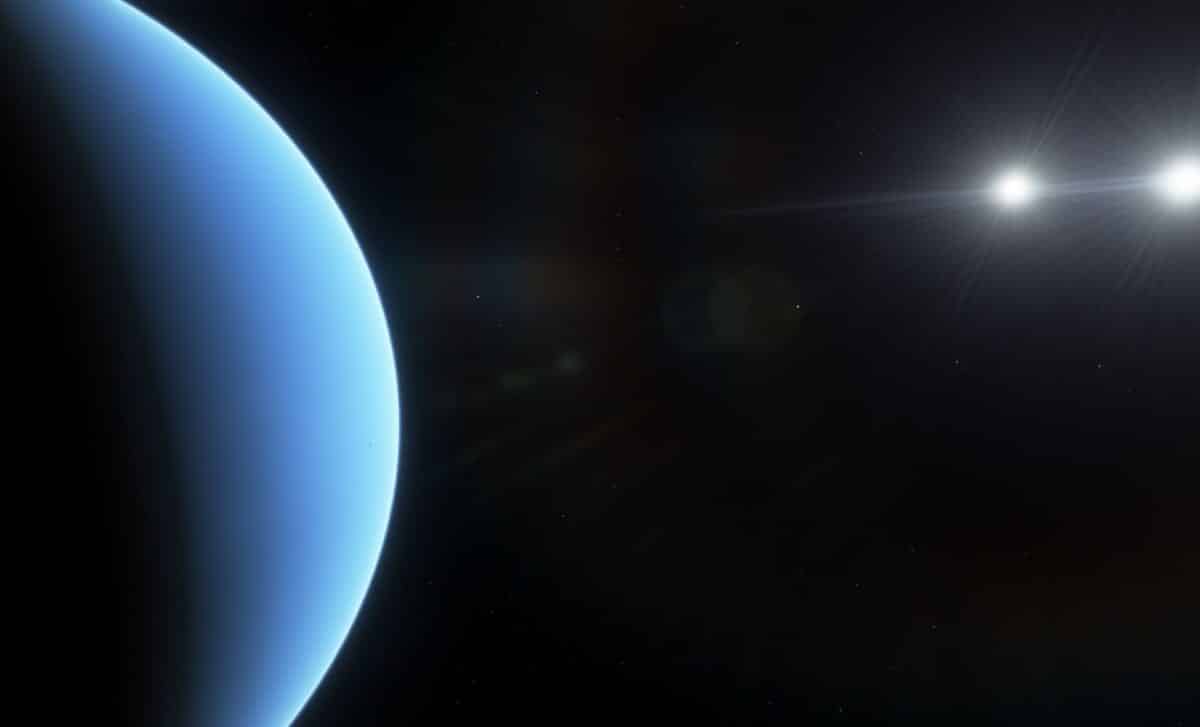
For decades, astronomers believed that Nereid, one of Neptune’s moons, was a captured object from the Kuiper Belt. However, recent research using advanced technology and simulations suggests a different origin story for this enigmatic moon. The findings could reshape our understanding of how Neptune’s moons formed and evolved.
Nereid Comes Into Focus With Webb
Discovered in 1949 by astronomer Gerard Kuiper, Nereid remained Neptune’s only known moon until Voyager 2 explored the planet in 1989. What made Nereid unique was its highly elliptical orbit, which takes about 360 days to complete. This unusual path led many researchers to think that Nereid was a captured Kuiper Belt Object (KBO), similar to Triton, Neptune’s largest moon.
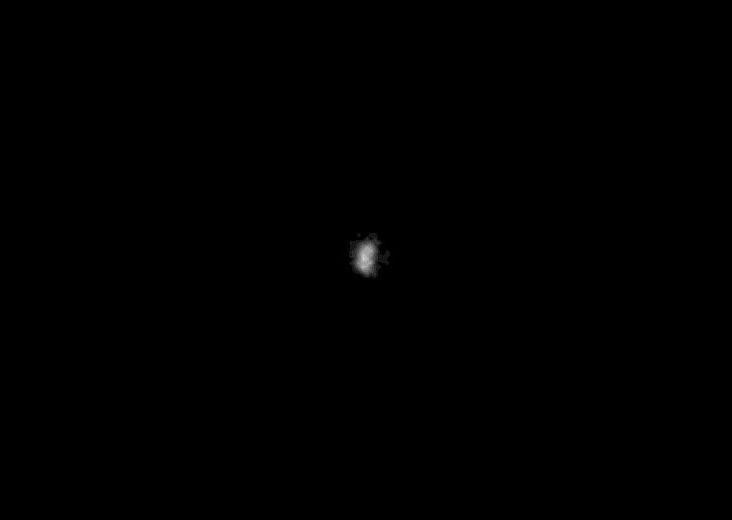
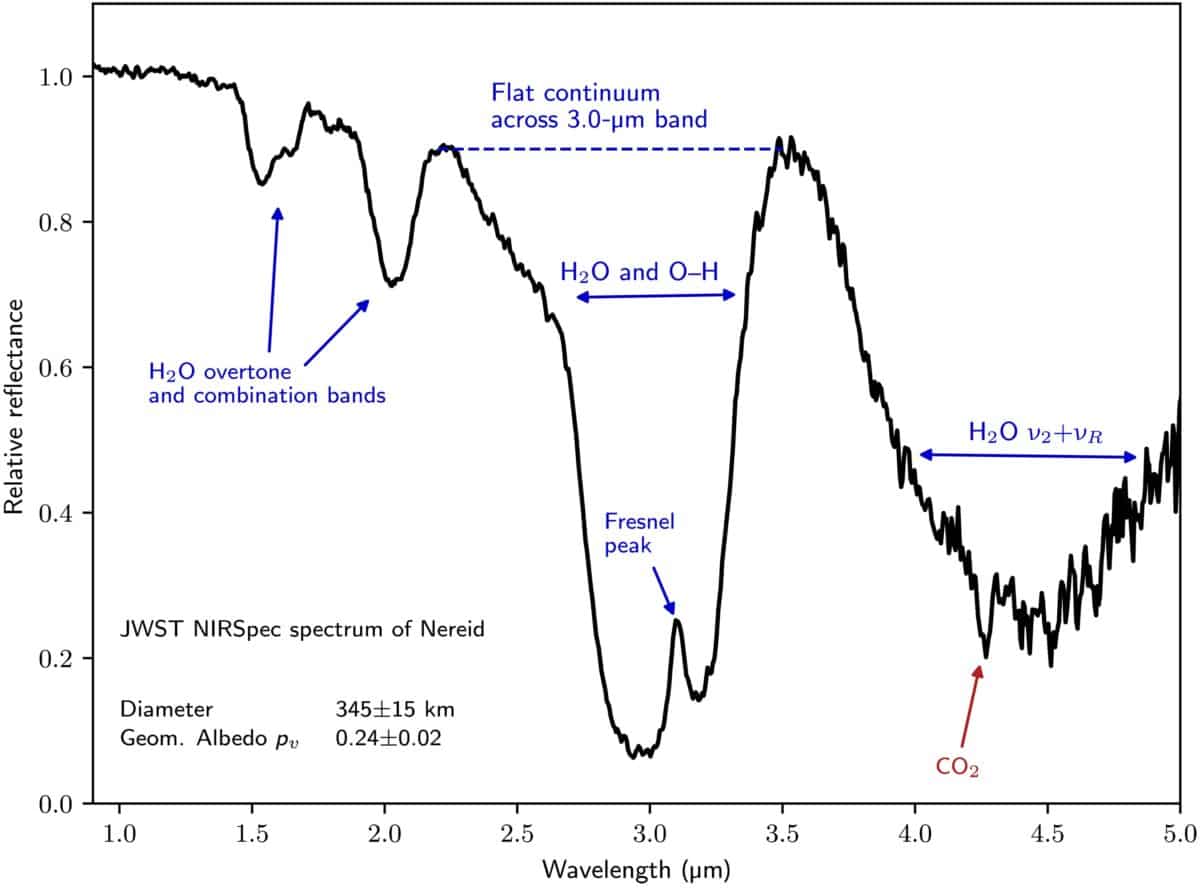
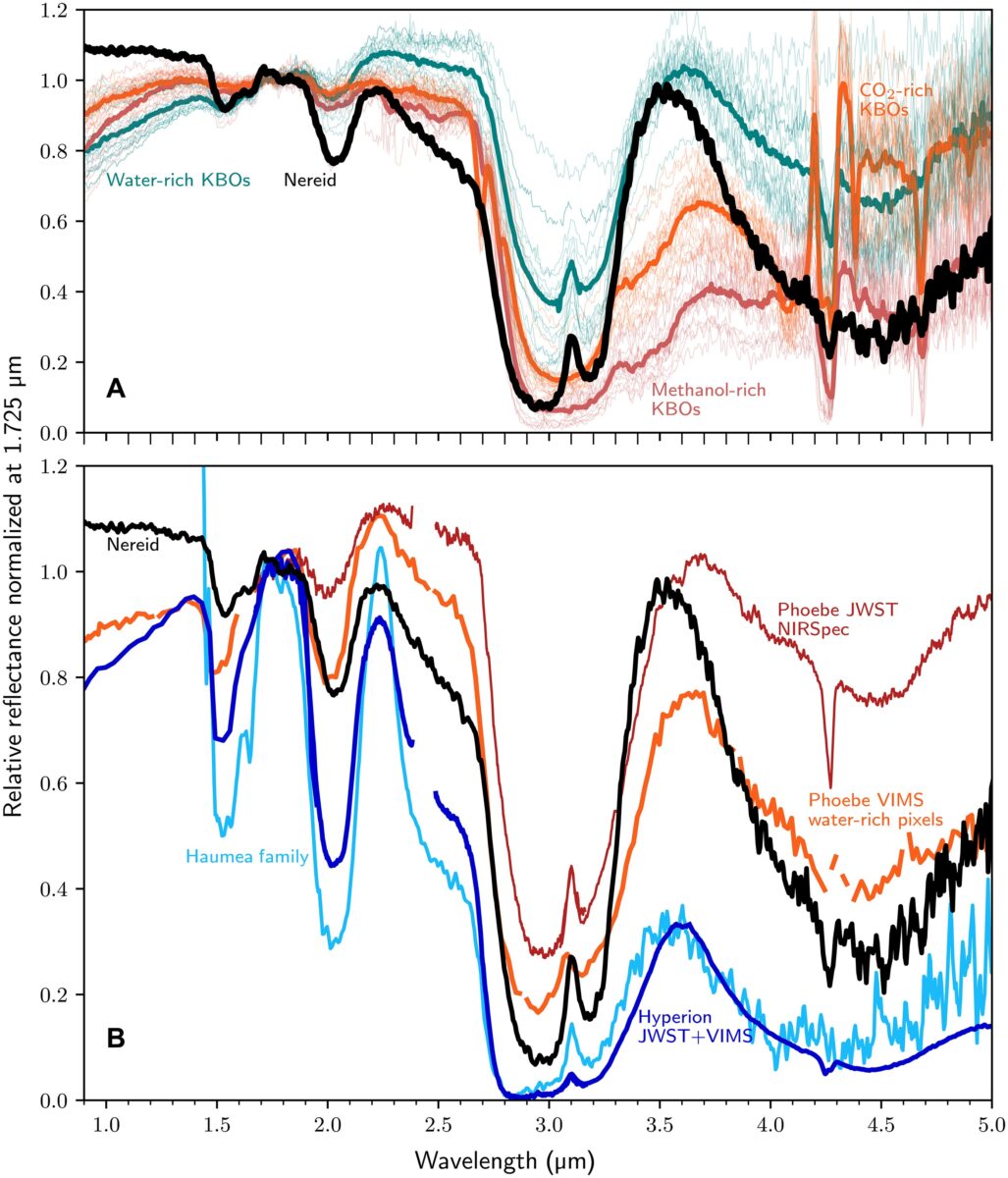
Using the James Webb Space Telescope (JWST)’s infrared instruments, scientists revisited this assumption. Their study revealed that Nereid’s surface differs significantly from that of known captured KBOs. For example, when comparing Nereid to Phoebe, a moon of Saturn considered a captured KBO, the results showed distinct differences in their infrared characteristics. According to a paper published in Science Advances:
“Nereid’s unique spectrum among outer Solar System bodies is not consistent with a scenario where Nereid is captured during the early Solar System’s dynamic instability.” These findings challenge the long-standing capture hypothesis.
Triton May Have Changed Everything
Triton, Neptune’s largest moon, is also believed to have originated in the Kuiper Belt. Unlike other moons, it orbits in the opposite direction of Neptune’s rotation, suggesting it did not form alongside the planet. Scientists think Triton was once part of a binary system before being captured by Neptune’s gravity, an event that likely involved significant turbulence.
To explore the implications of this capture, researchers used simulation software called REBOUND to model an early Neptune with a system of regular moons. They then introduced Triton into the model to see what happened next.
The simulations revealed that Triton’s arrival caused chaos among Neptune’s moons. Many were either ejected or collided with others. The debris from these events may have contributed to the formation of Neptune’s rings and some of its smaller moons, such as Proteus.
A Survivor From Neptune’s Lost Moon System?
One recurring result in the simulations was that in about 20% of the runs, Triton’s gravitational influence sent one of Neptune’s native moons into a stable, highly elongated, and tilted orbit—similar to Nereid’s.
Researchers propose that this scenario explains Nereid’s current position without requiring it to be a captured object. Instead, Nereid may have originally been a regular moon of Neptune that was thrown outward during the turmoil caused by Triton’s arrival.
Scientists believe Nereid could be a rare remnant of a lost generation of Neptunian moons. As much of the original satellite system was destroyed through collisions and ejections, Nereid managed to survive, offering a glimpse into Neptune’s tumultuous past.
Implications for Our Understanding of the Solar System
This new theory challenges previous assumptions about Nereid’s origin and highlights the complex interactions that shaped the Solar System. It also underscores the importance of continued exploration and observation, as new technologies like the James Webb Space Telescope provide unprecedented insights into distant worlds.
By reevaluating the history of Neptune and its moons, scientists can gain a deeper understanding of planetary formation and the dynamic processes that have influenced our cosmic neighborhood over billions of years.